Evaluating insurance policy management software is harder than it looks. Most platforms promise end-to-end automation, seamless integrations, and faster workflows, but the reality only becomes clear once you're deep into a demo or, worse, mid-implementation.
Some tools are built for large carriers with dedicated IT teams and six-figure budgets. Others are designed for lean broker teams that need something up and running in days, not months.
The ten platforms in this guide represent a broad range of approaches to policy management, from enterprise core systems to no-code automation tools. For each one, we've broken down what it actually does, where it fits, and what to watch out for, so you can make a faster, more confident decision.
|
To curate this list, we evaluated how widely recommended insurance policy management platforms perform by comparing their capabilities with real user feedback.
We then looked beyond feature lists and assessed what matters in real policy management operations:
- How well each platform covers the core policy lifecycle
- Can it automate routine tasks without manual intervention?
- Does it support audit trails and compliance documentation?
- How easily does it integrate with carriers, billing tools, and CRMs?
- Can it scale across lines of business without heavy reconfiguration?
The tools below include both purpose-built insurance platforms and broader low-code solutions that insurers adapt for policy management. We've noted the best use case fit for each platform to help you evaluate them more easily.
|
|
Tool
|
Policy Management Strength
|
G2 Rating (out of 5)
|
Best For
|
|
Origami Risk
|
Integrated policy administration and risk management
|
4.6
|
Insurers combining RMIS and policy operations
|
|
FlowForma
|
No-code policy and renewal workflow automation
|
4.5
|
Ops teams automating workflows without IT
|
|
Insly
|
Policy admin and bordereaux automation for brokers
|
4.5
|
Brokers and MGAs managing policy operations
|
|
NowCerts
|
Policy, commissions, and certificate management
|
4.5
|
Independent agencies and smaller brokerages
|
|
Applied Epic
|
Agency-wide policy and client management
|
4.4
|
Independent agencies managing P&C and Benefits
|
|
Power Apps + Automate
|
Custom policy apps and workflow automation
|
4.3 (for Power Apps) and 4.4 (Power Automate)
|
Microsoft-first insurers building tailored solutions
|
|
Sapiens
|
Multi-line policy administration for carriers
|
4.4
|
Insurers managing life, P&C, or workers' compensation
|
|
Nintex
|
Document generation and approval workflow automation
|
4.3 |
Enterprises with document-heavy policy processes
|
|
BriteCore
|
Cloud-native policy, billing, and claims administration
|
4.3
|
P&C carriers modernising core systems
|
|
Guidewire Software – InsuranceSuit
|
End-to-end policy, billing, and claims suite
|
4.1
|
Enterprise P&C carriers
|
Overview of the 10 leading insurance policy management software tools
Let’s explore each platform in detail—starting with Sapiens
1. Sapiens
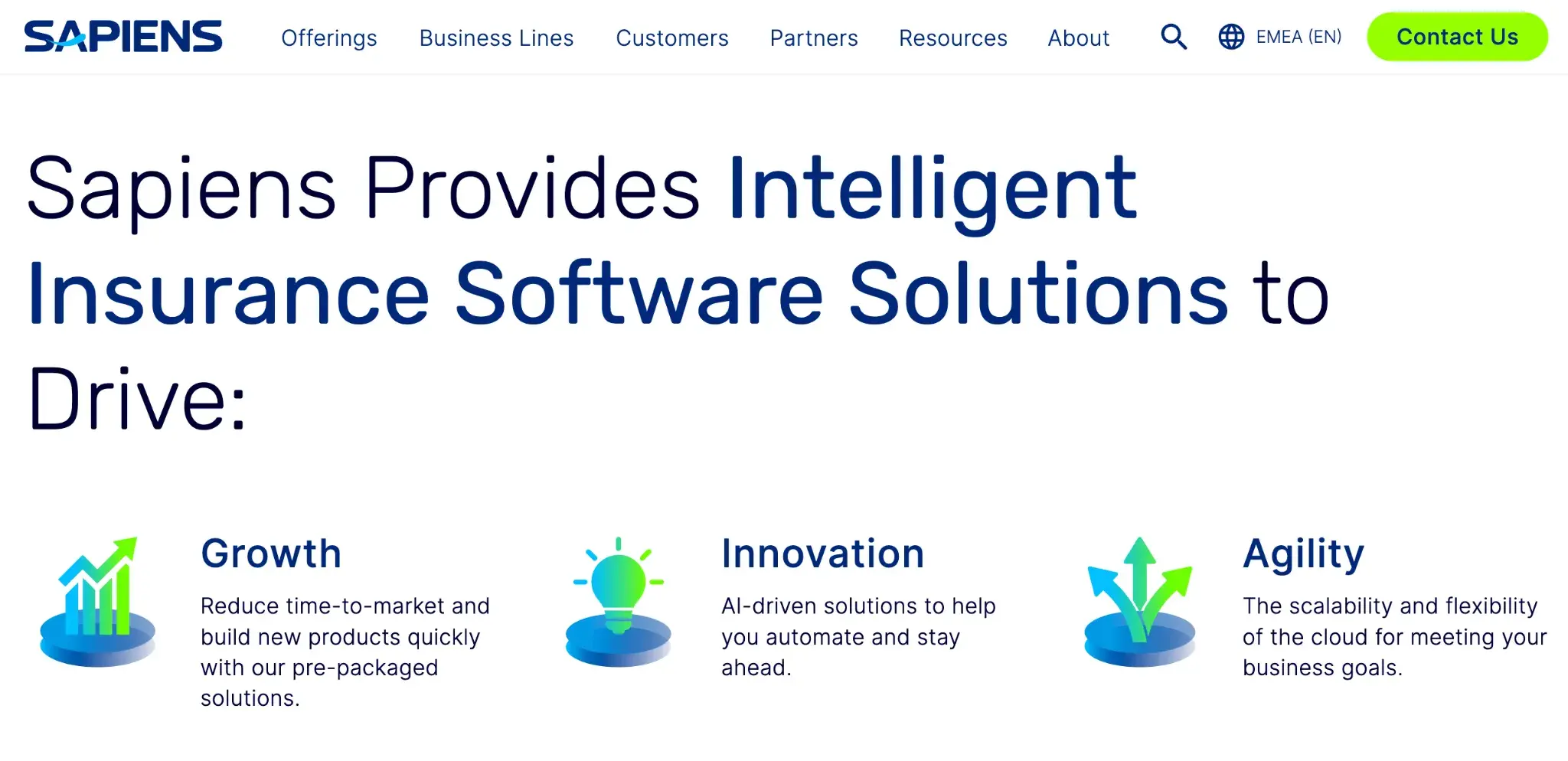
Sapiens’s homepage
With four decades of insurance industry experience, Sapiens offers a comprehensive, cloud-native platform covering the full spectrum of insurance operations, from policy administration and underwriting to billing, claims, and reinsurance. It serves carriers across life, annuities, property and casualty, and workers' compensation, making it a solid fit for large insurers managing multiple lines of business.
Key features of Sapiens
Multi-line policy administration
Sapiens provides dedicated CoreSuites for P&C, life and annuities, and workers' compensation, each with out-of-the-box lifecycle support for policy issuance, endorsements, renewals, and auditing.
Low-code product configuration
Pre-built templates and reusable components help your teams move faster without relying heavily on developers for each product update.
Digital engagement suite
Sapiens includes pre-integrated agent portals, customer self-service portals, and chatbot capabilities, giving policyholders and agents a modern, digital-first experience.
Analytics and regulatory compliance
The platform provides built-in data analytics and AI-powered decision support that surface real-time insights on policy performance, risk modeling, and customer retention.
Pros of Sapiens
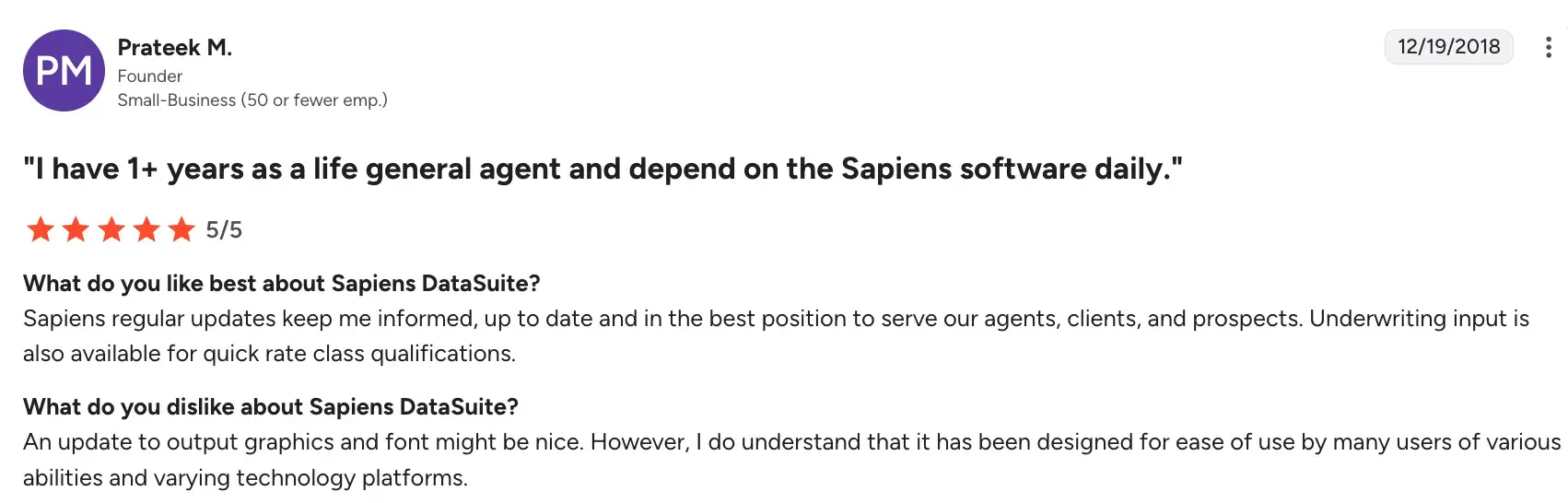
- Covers P&C, life, annuities, and workers' compensation in a single platform.
- Pre-configured compliance tools reduce the effort required to adapt to new regulatory requirements.
Source
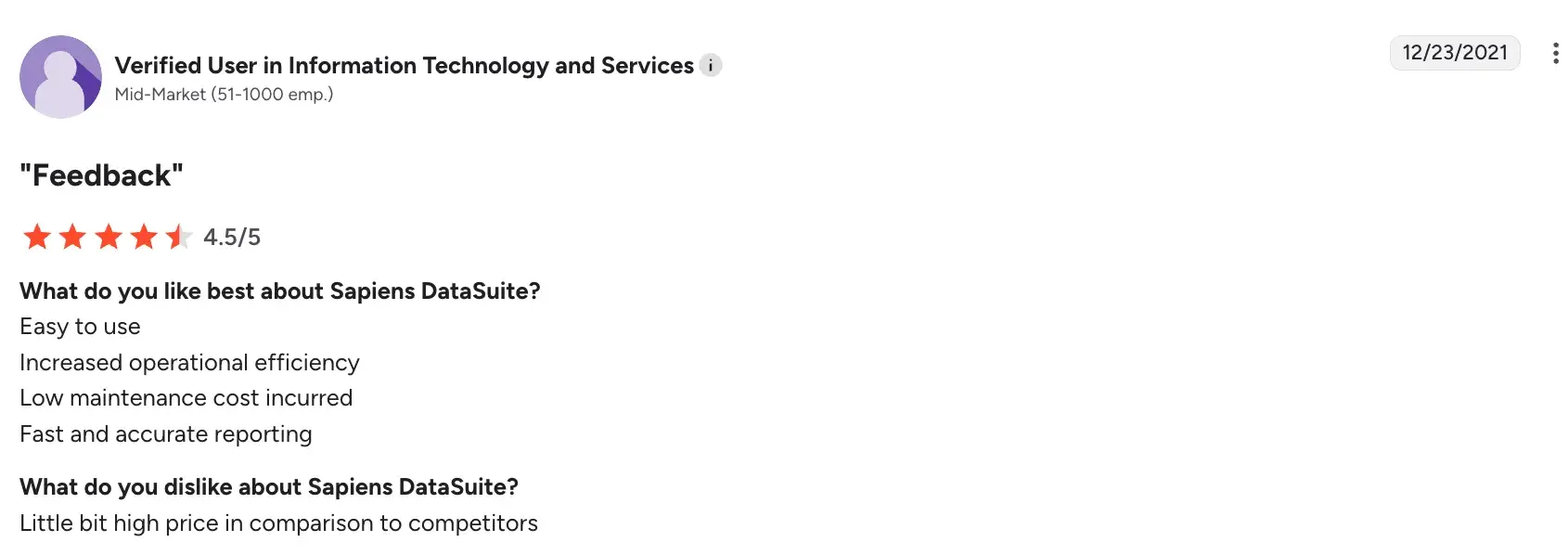
- Strong coverage across multiple insurance lines, including specialty areas
Source
Cons of Sapiens
- Configuring workflows across multiple product lines has a steep learning curve.
- Implementation timelines tend to be lengthy and resource-intensive.
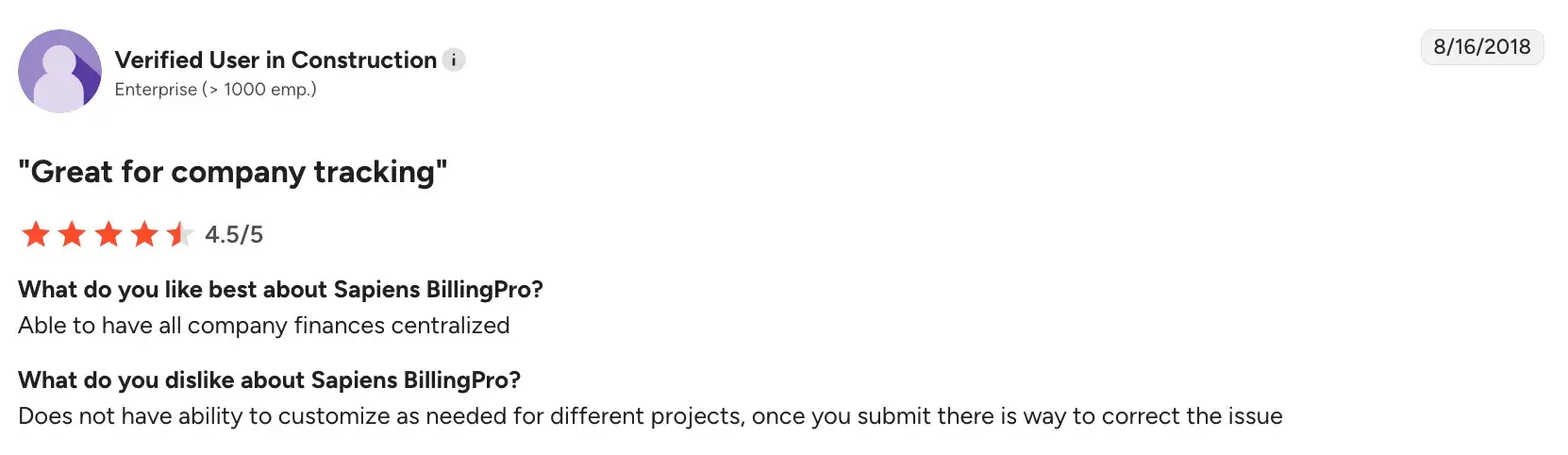
- Lacks centralized customization features
Source
2. FlowForma

FlowForma insurance homepage
FlowForma is an AI-powered, no-code process automation platform built for regulated industries like insurance. You can use it to digitize and automate your entire policy lifecycle, from issuance and approvals to renewals and compliance tracking, all without writing a single line of code. It integrates natively with Microsoft 365, making it a natural fit if your team already works within that ecosystem.
Key features of FlowForma
No-code workflow automation
FlowForma's drag-and-drop workflow builder lets your business teams design, deploy, and update insurance workflows without any IT involvement. You can quickly automate policy issuance, mid-term adjustments, and renewal triggers, resulting in faster turnaround and fewer bottlenecks in day-to-day operations.
AI Copilot and agentic AI
The AI Copilot lets you build workflows by simply describing what you need in plain language.
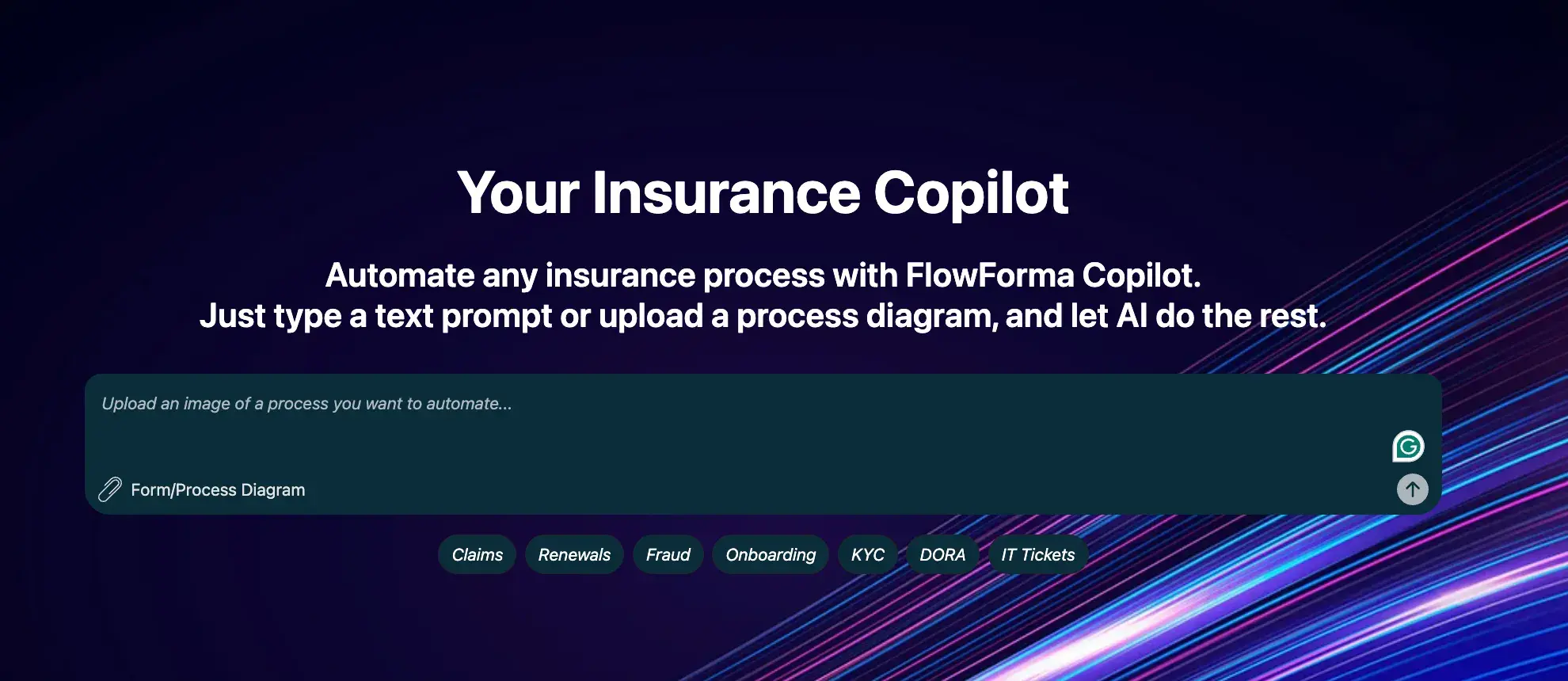
FlowForma playground for insurance
Specialized AI agents, such as the Policy Agent and Claims Agent, go further by reviewing policy documents, identifying coverage gaps, validating data, and flagging priority cases in real time, helping your teams make faster and more accurate decisions.
Document generation
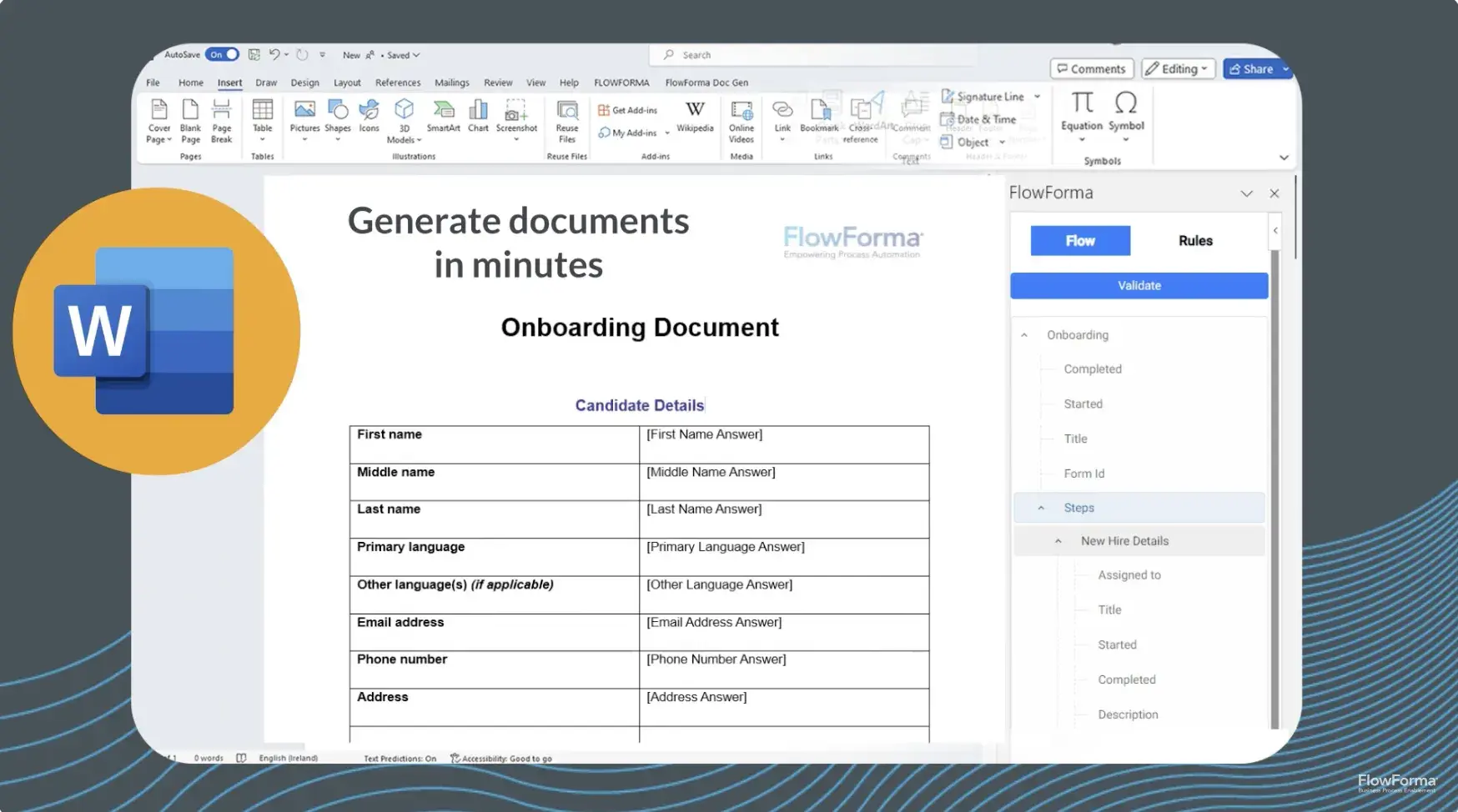
Generate documents automatically with FlowForma’s document generation feature
FlowForma automatically generates policy contracts, renewal notices, and compliance documents by pulling data directly from completed workflows. Every document is consistently formatted and routed to the right stakeholders, reducing manual errors and keeping your records audit-ready.
Microsoft 365 integration and audit trails
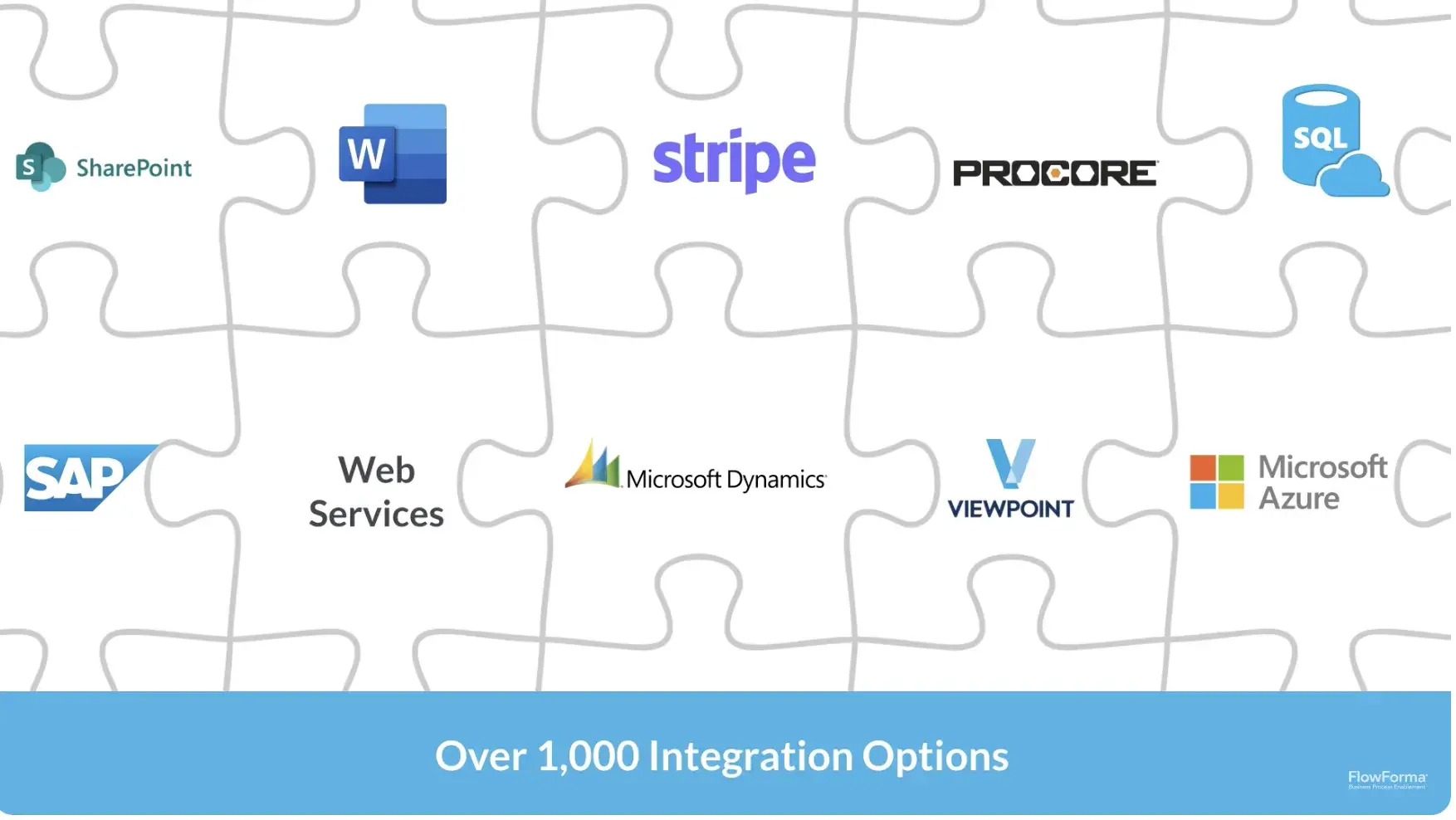
A look at how FlowForma integrates with other platforms
FlowForma integrates seamlessly with SharePoint, Teams, and Outlook, keeping collaboration within the tools your team already uses. Every step in a workflow is logged with a built-in audit trail, so you always have a full, time-stamped record for compliance reviews and regulatory audits.
Pros of FlowForma
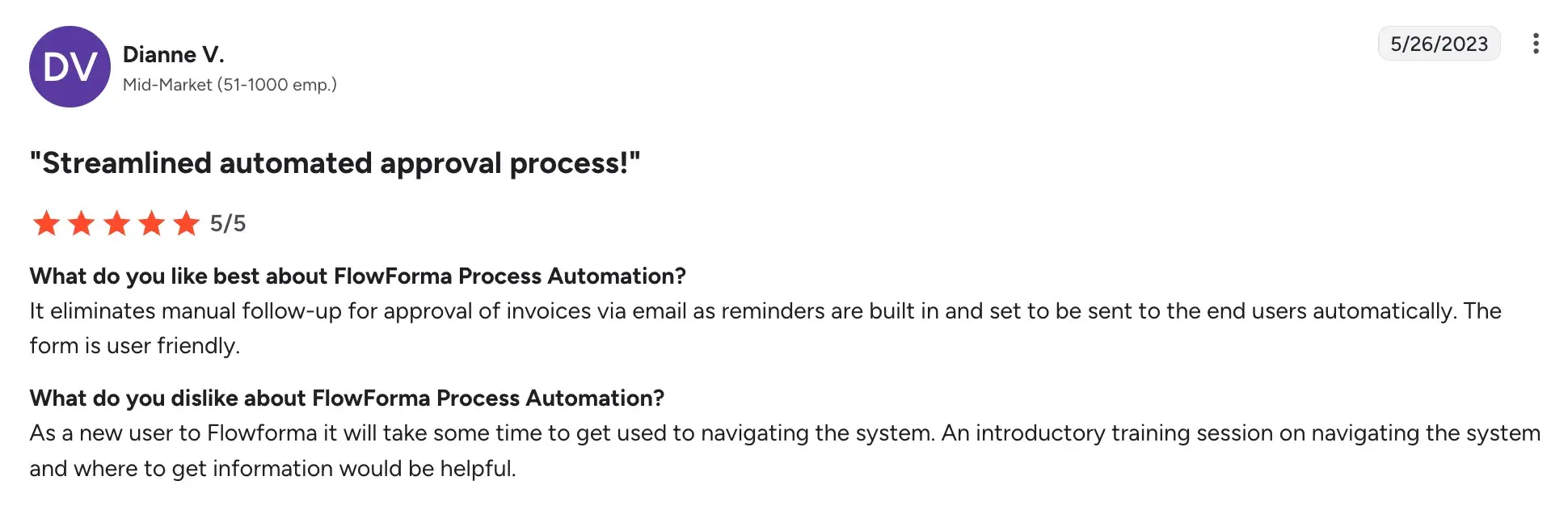
- Business users can build and modify workflows without waiting on IT.
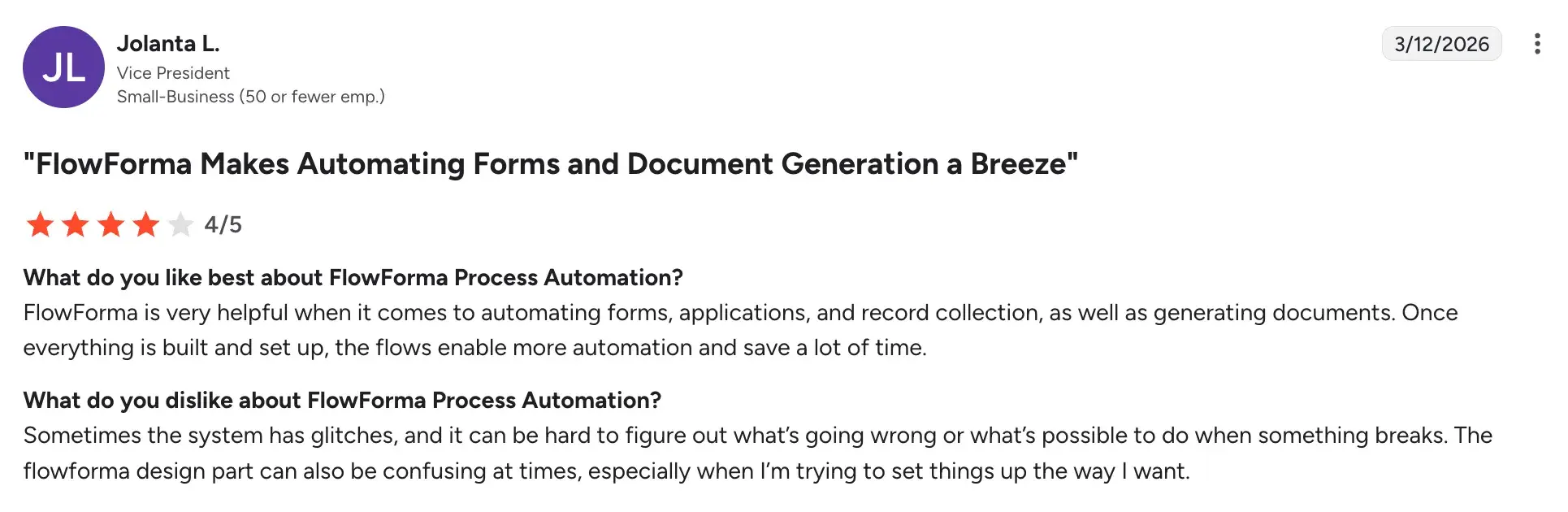
Source
- Native Microsoft 365 integration makes adoption smoother for existing users.
- Fast deployment and approval automation compared to more complex enterprise platforms
Source
Cons of FlowForma
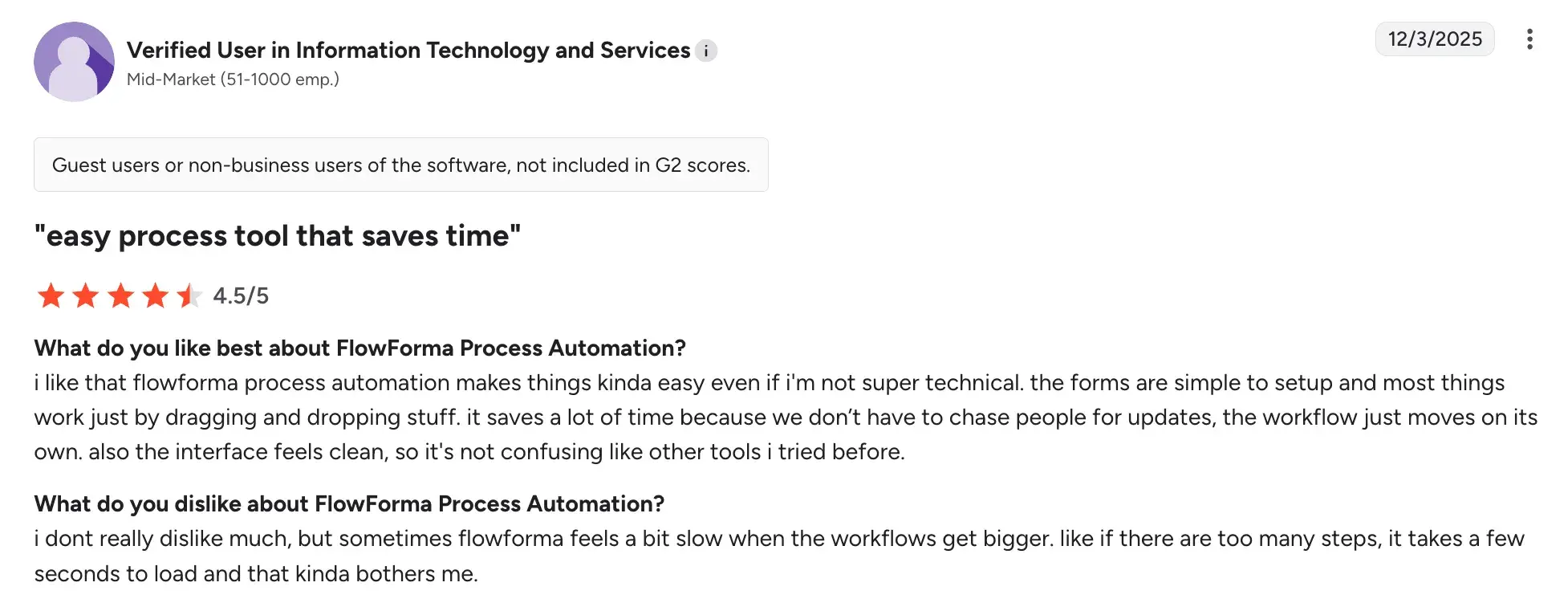
- Organizations outside Microsoft 365 may find integration options limited.
- Reporting features can feel basic for enterprise-scale needs
Source
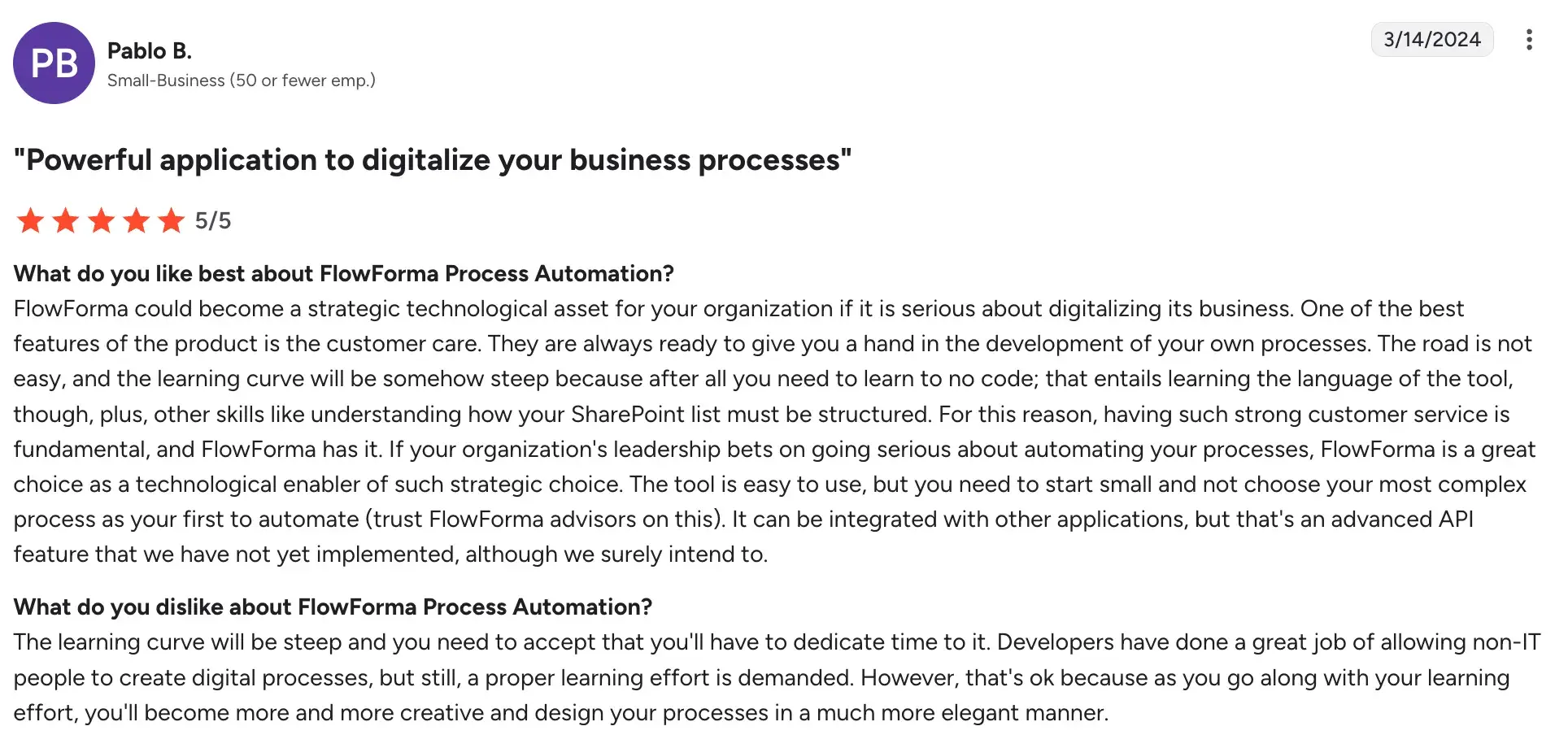
- Teams new to workflow automation may face an initial learning curve.
Source
3. Guidewire InsuranceSuite
Guidewire’s homepage
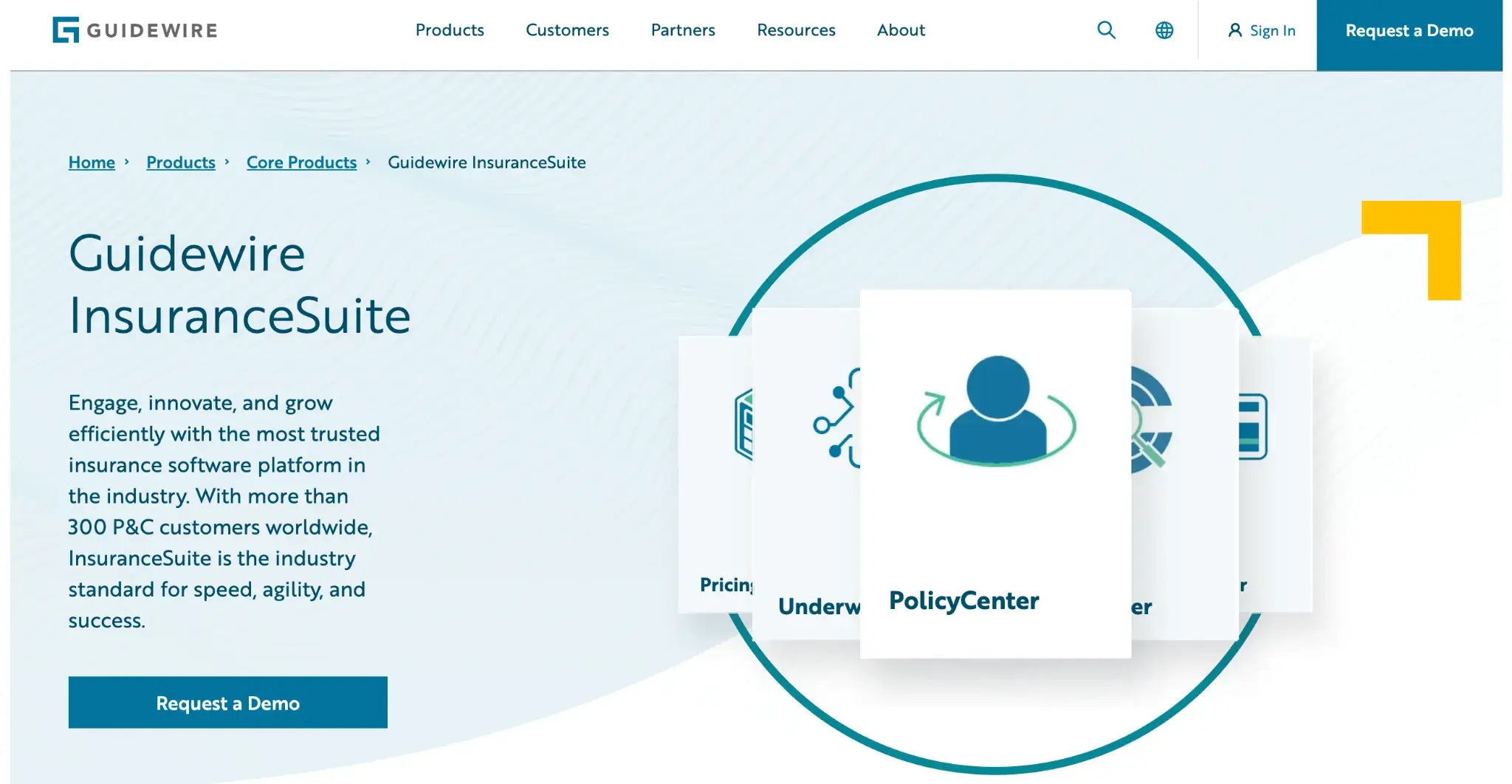
Guidewire InsuranceSuite is one of the most widely recognized core systems platforms in the property and casualty insurance market. It brings together policy administration, billing, and claims management in a single, integrated suite, giving carriers a unified platform to manage the full policy lifecycle from quote to renewal.
Key features of Guidewire
PolicyCenter
PolicyCenter is Guidewire's dedicated policy administration module. It supports quoting, issuance, endorsements, renewals, and underwriting across both personal and commercial lines.
Integrated billing and claims management
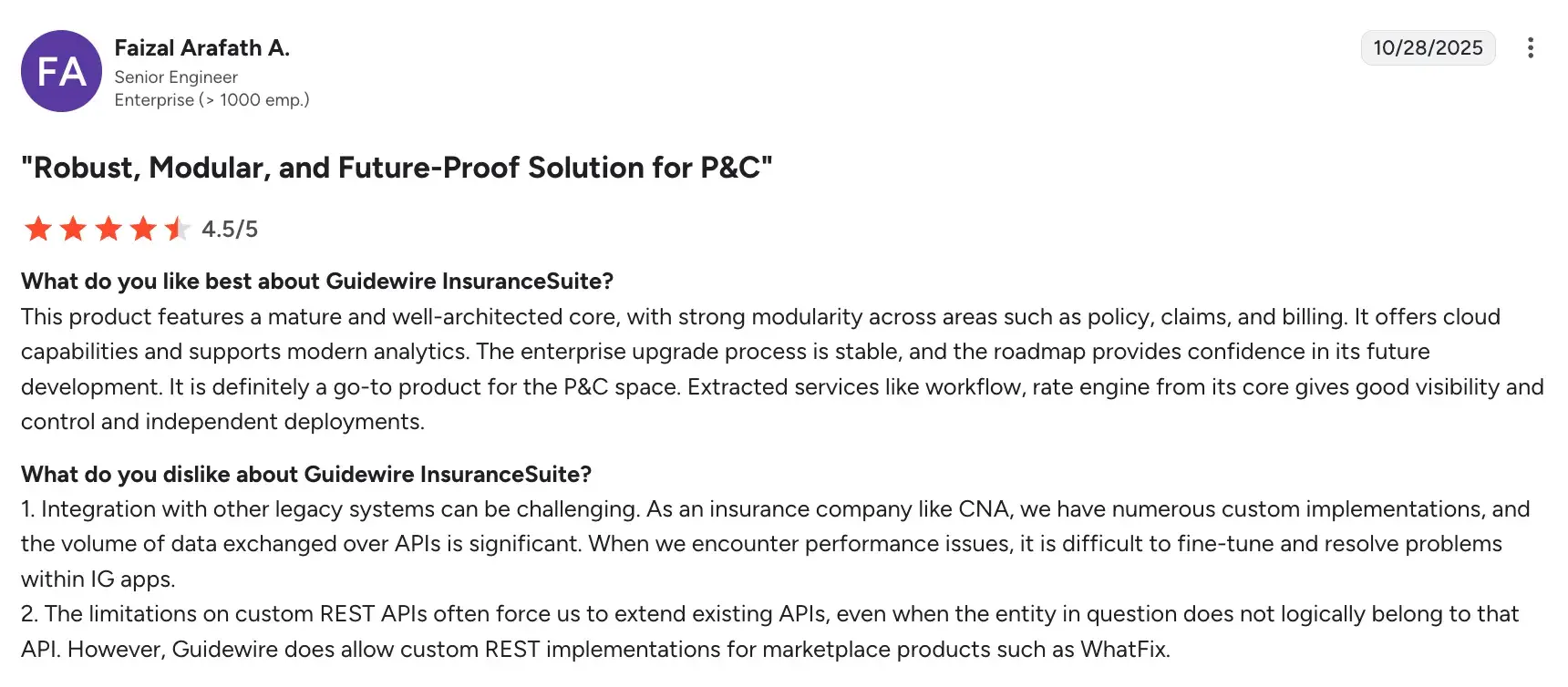
BillingCenter and ClaimCenter connect directly to PolicyCenter, creating a seamless flow of information across the policy lifecycle. This integration reduces manual data transfer between departments, improves data consistency, and gives your teams a complete picture of every policy, payment, and claim in one place.
Cloud-native architecture and marketplace
The Guidewire Marketplace also offers a broad library of prebuilt integrations with vendors such as DocuSign, LexisNexis, and CoreLogic, so you can extend the platform without building from scratch.
Configurable business rules and workflows
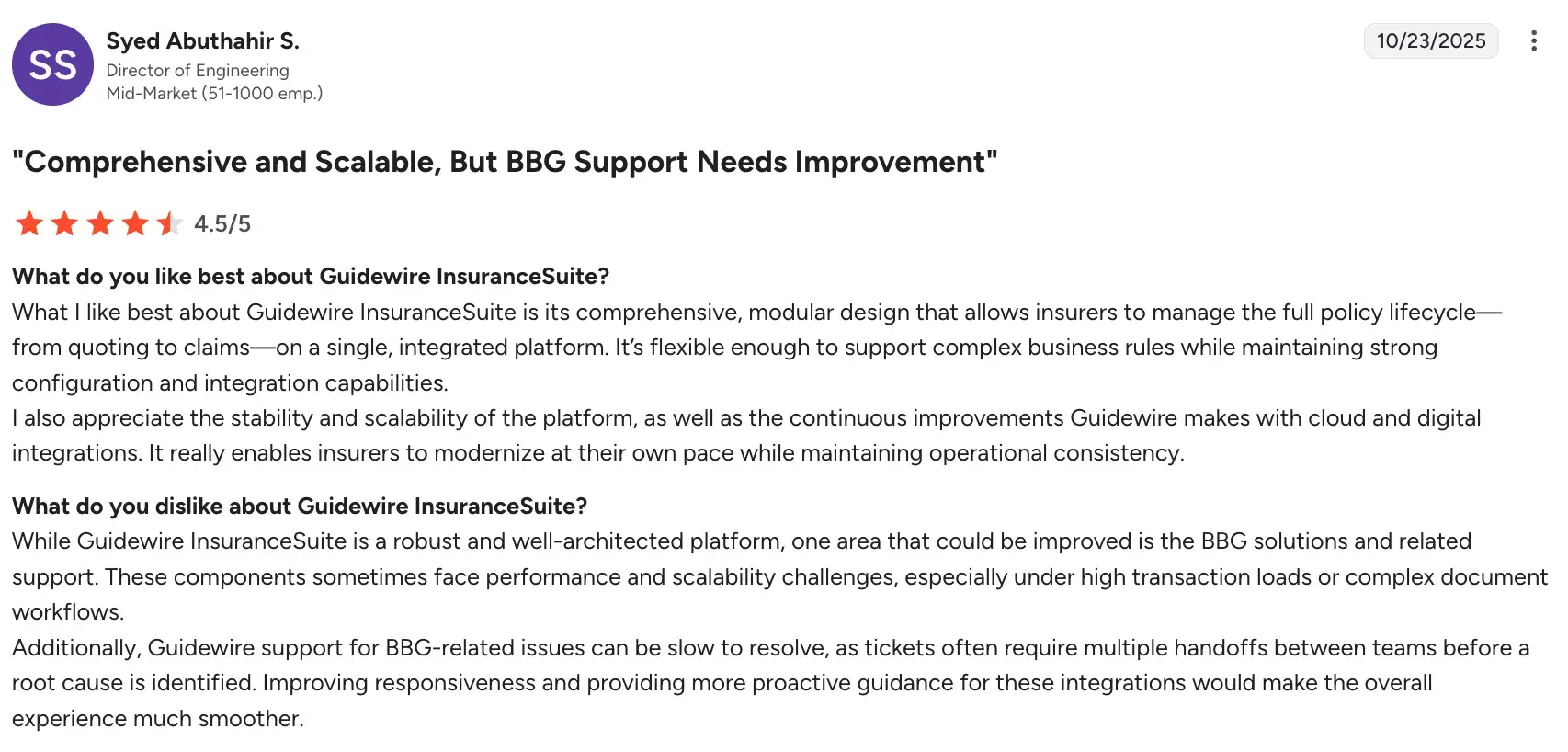
Your underwriting and operations teams can configure business rules, workflow automation, and routing logic to match your specific processes.
Pros of Guidewire
- Integrated policy, billing, and claims suite provides a single source of truth across core operations.
Source
- A large marketplace offers a wide range of pre-built vendor integrations.
- Strong configurability lets insurers tailor workflows and product rules to their needs.
Source
Cons of Guidewire
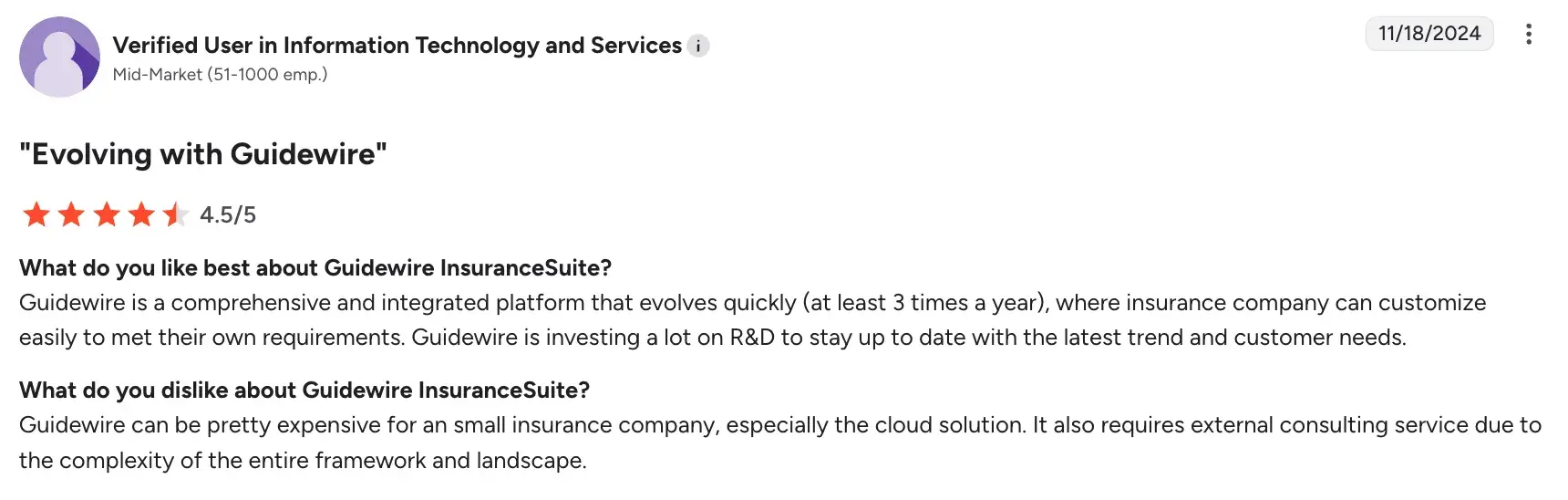
- Implementation typically requires specialized consulting expertise and comes with high costs.
Source
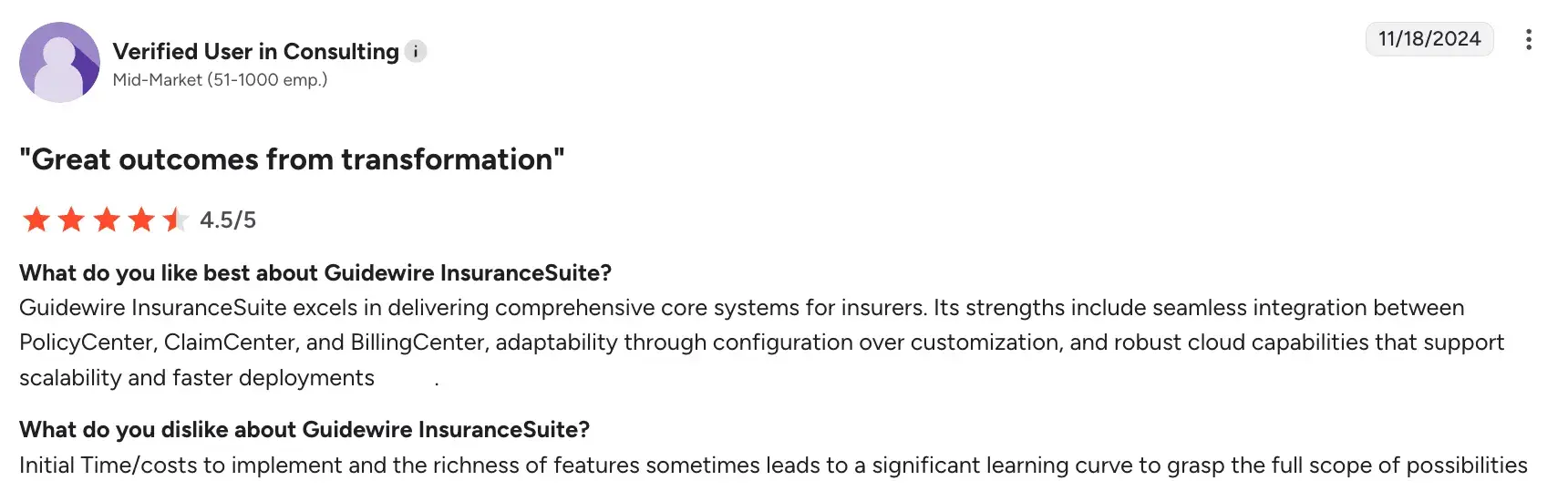
- Smaller carriers may find the platform's scale and complexity difficult to manage.
Source
- Customer support quality has been reported as inconsistent, particularly post-cloud migration.
4. Applied Epic
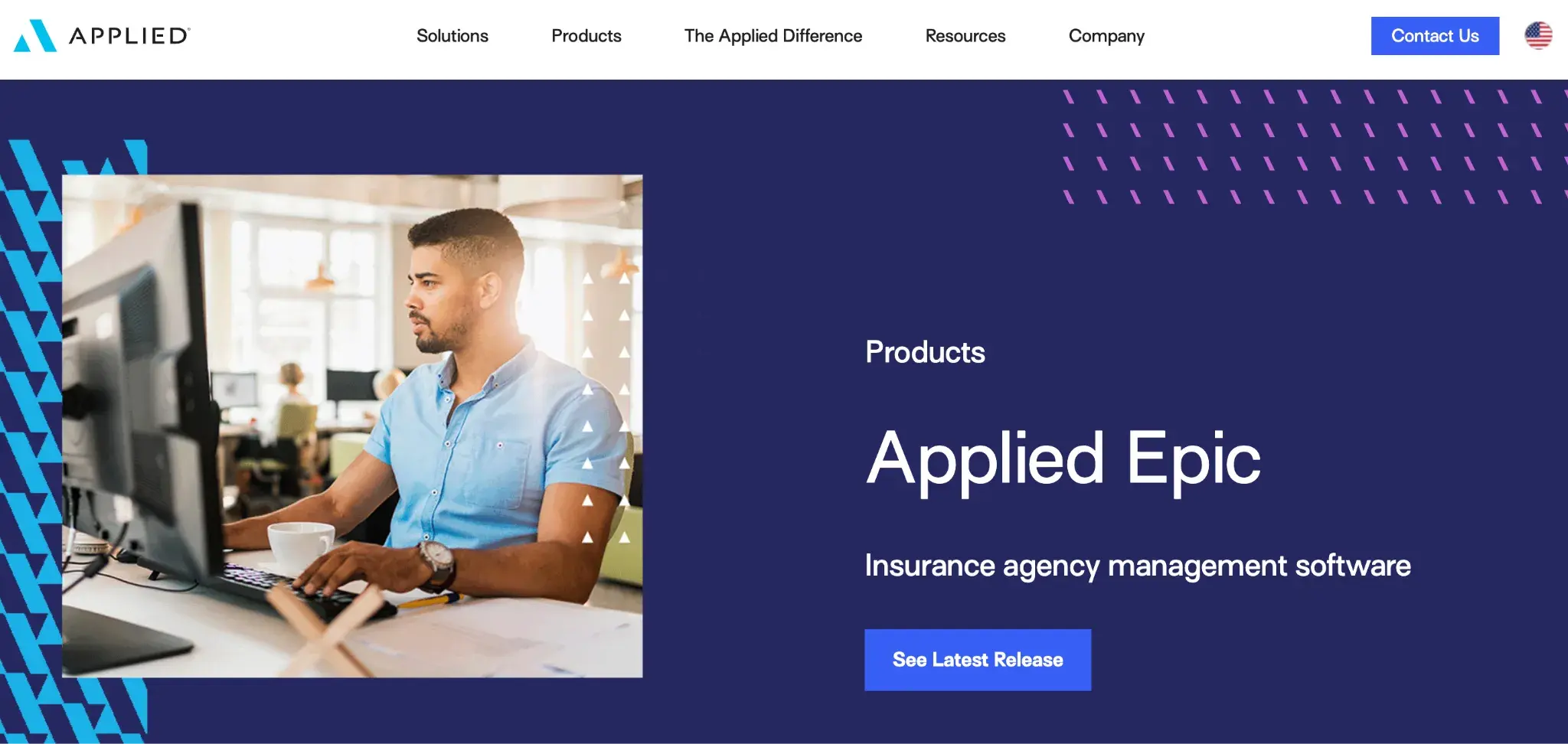
Applied Epic’s homepage
Applied Epic is the world's most widely used insurance agency management system, designed for mid-size to enterprise independent agencies managing both property and casualty and employee benefits. It gives your entire agency, across all roles, locations, and lines of business, a single platform for prospecting, quoting, servicing, and renewing policies.
Key features of Applied Epic
Unified agency management
Applied Epic centralizes your entire agency's operations on a single browser-native platform. Agents can view account details, complete quotes, process renewals, and file claims from any device.
Insurer connectivity via IVANS
Integrated connectivity with IVANS Exchange lets your team access markets, submit quotes, and exchange policy details with carriers and MGAs directly from within the management system.
Sales and pipeline management
Applied Epic includes a built-in CRM and sales automation module that helps your producers track prospects, manage renewal pipelines, and monitor book-of-business performance through dedicated dashboards.
Document management and reporting
The platform provides structured document storage with version history and a robust reporting suite that gives managers real-time visibility into agency performance, productivity, and profitability.
Pros of Applied Epic
- A single platform for P&C and Benefits gives brokers a consolidated view of their entire book of business.
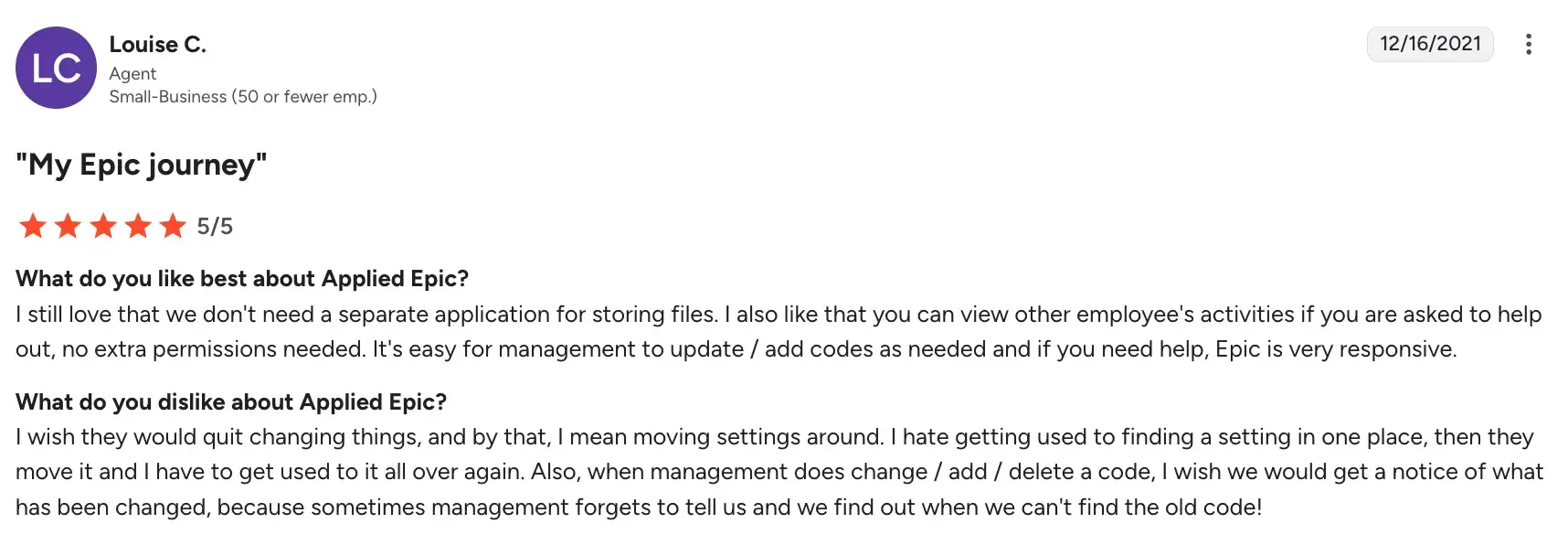
Source
- IVANS connectivity reduces manual data entry and speeds up quoting and servicing.
- User-friendly and intuitive platform
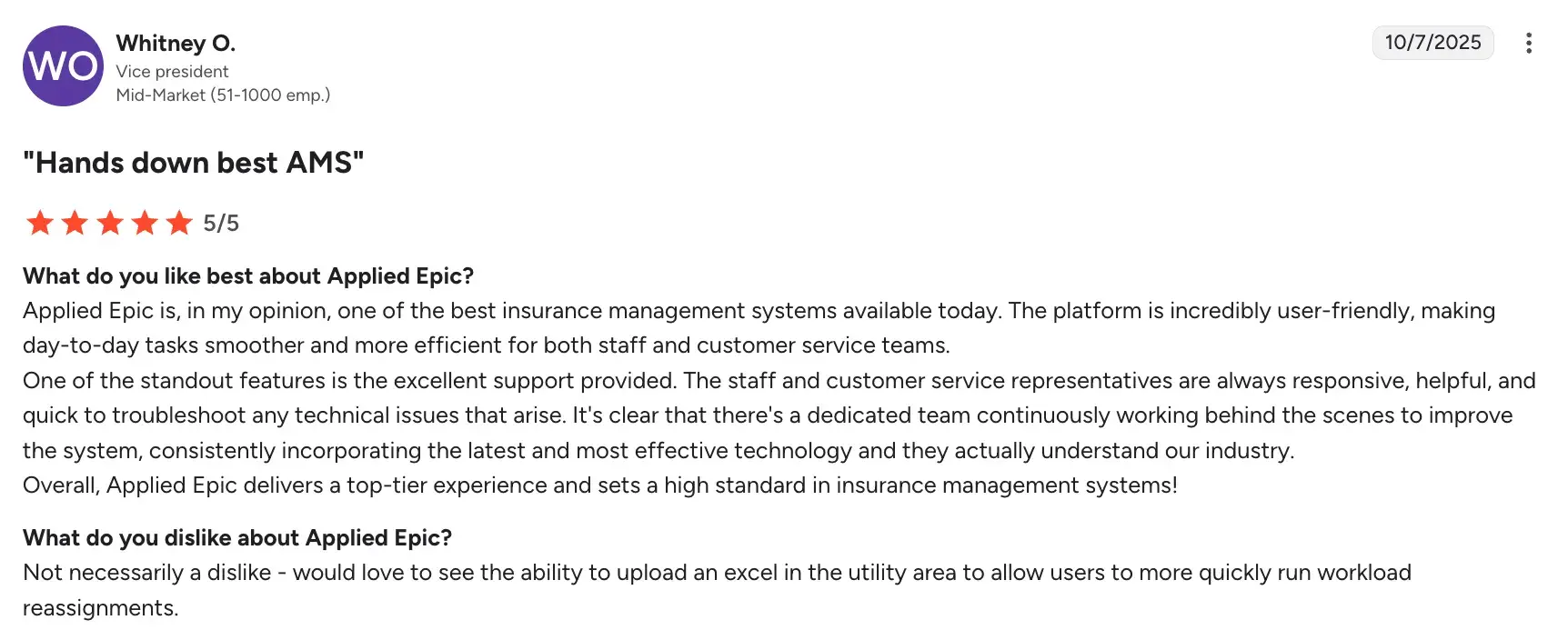
Source
Cons of Applied Epic
- Notable learning curve
- Some workflows feel click-heavy, slowing down high-volume processing tasks.
- Initial setup and data migration require significant time and investment.
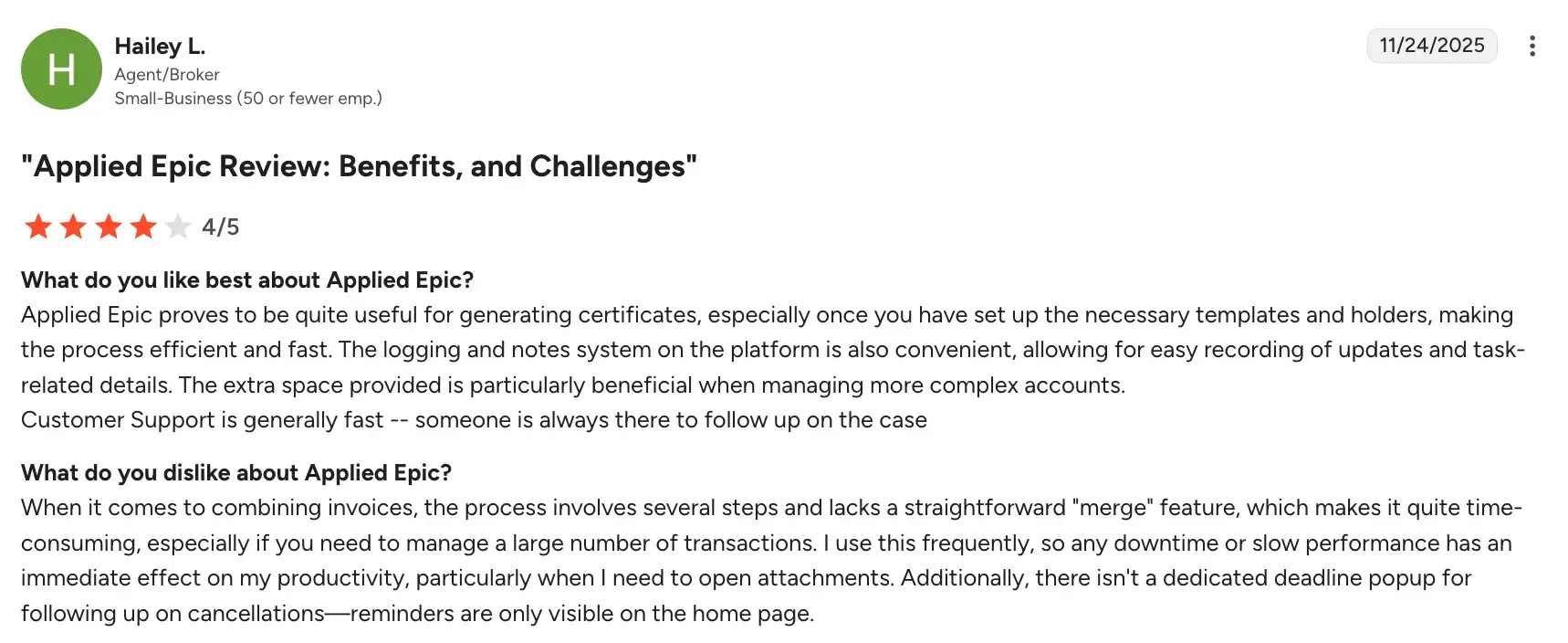
Source
5. Nintex
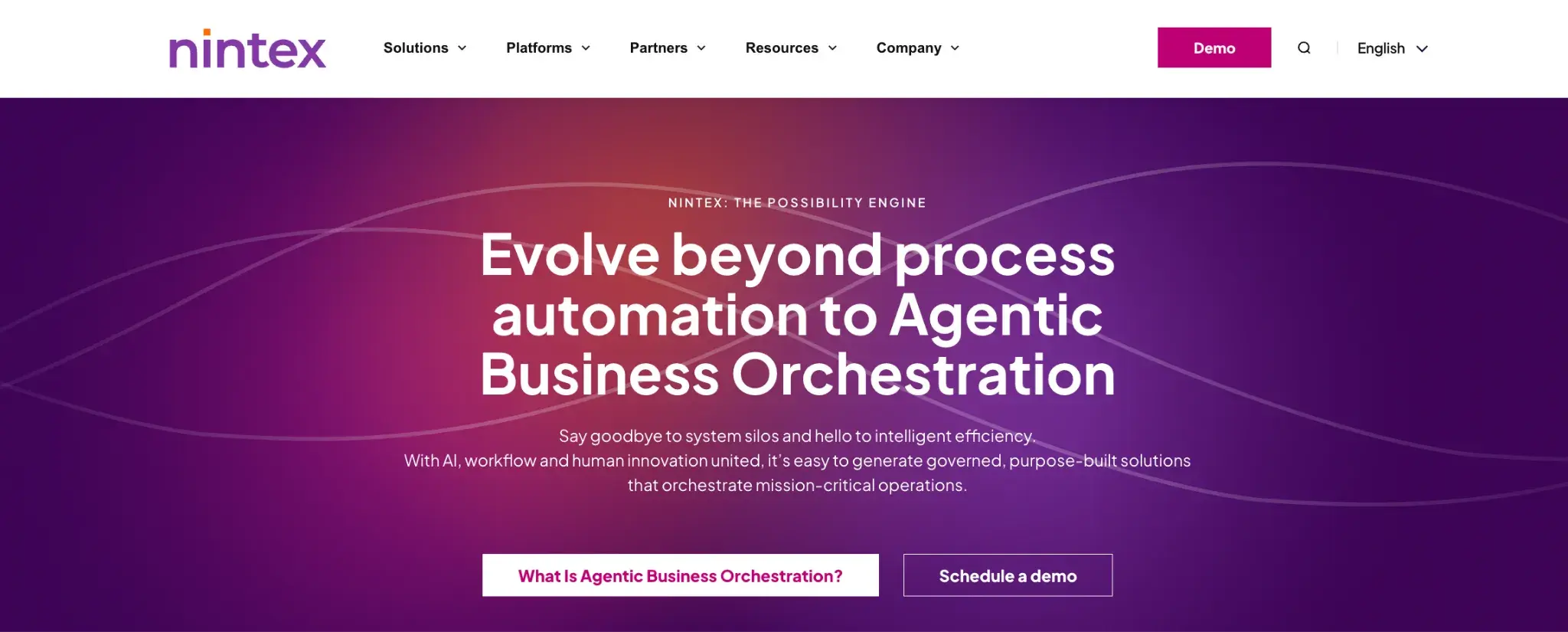
Nintex's Homepage
If your organization is looking to digitize and automate specific processes, such as policy modification approvals, document generation, or compliance tracking, Nintex gives your operations and IT teams the tools to build those workflows using a visual, drag-and-drop interface.
Key features of Nintex
Visual workflow automation
Nintex's drag-and-drop workflow designer lets your team map, automate, and monitor multi-step processes without writing code. For insurance operations, this means you can build automated approval chains for policy changes, route endorsement requests to the appropriate reviewers, and trigger notifications when policy status changes.
Document generation and e-signatures
The platform can automatically generate policy-related documents, such as certificates, renewal notices, and compliance reports, using pre-approved templates and live data from your connected systems.
RPA for carrier system updates
Nintex Robotic Process Automation enables bots to log in to carrier portals and automatically make policy updates, removing the need for manual re-entry across multiple systems.
Microsoft 365 and SharePoint integration
Nintex integrates deeply with SharePoint and Microsoft 365, making it well-suited for organizations that manage policy documents, approvals, and communications within that ecosystem.
Pros of Nintex
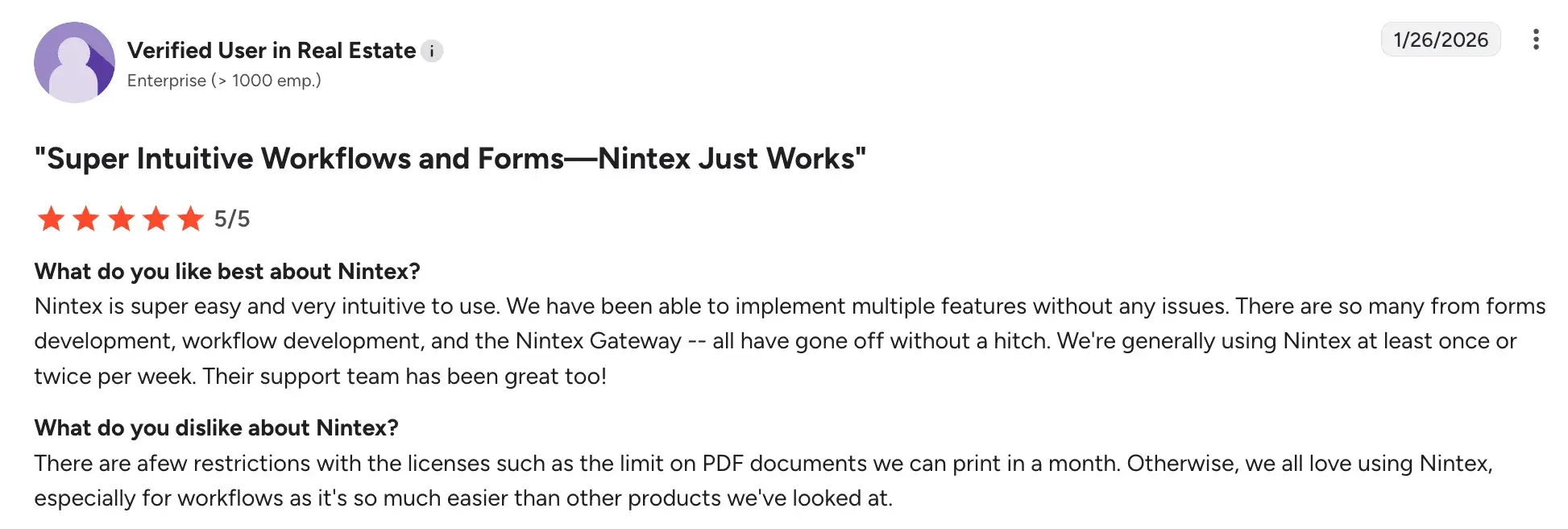
- The visual interface makes workflow building accessible to non-technical users.
- Deep Microsoft 365 and SharePoint integration suits teams already in that environment.
- Strong document generation capabilities relevant to insurance
Source
Cons of Nintex
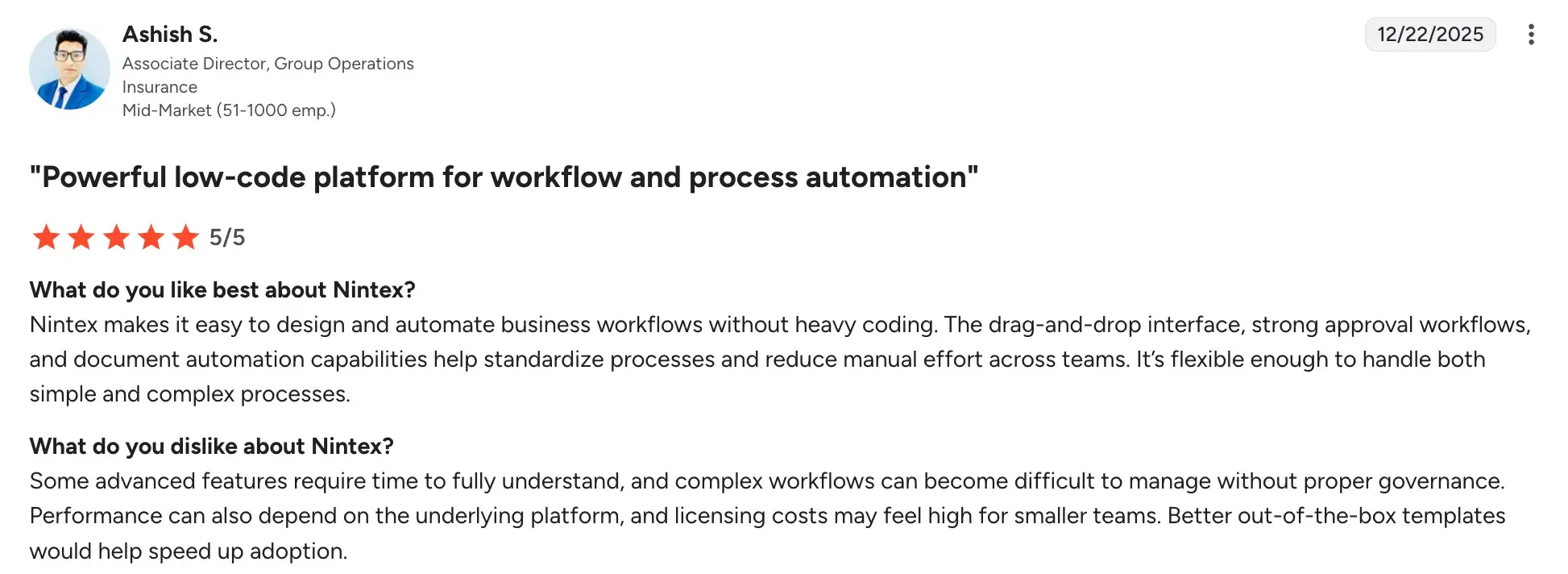
- Significant configuration is needed to replicate dedicated policy management functionality.
- Consumption-based pricing can be unpredictable and difficult to manage at scale.
- Pricing and packaging can be hard to forecast without a detailed scope
Source
6. Power Apps + Automate

Microsoft’s Power Platform
Microsoft Power Apps and Power Automate are low-code tools within the Microsoft Power Platform that insurers can use to build custom policy management applications and automate related workflows. Together, they offer a flexible foundation for carriers and agencies that want to extend their existing Microsoft infrastructure without committing to a purpose-built insurance platform.
Key features of Power Apps + Automate
Custom insurance application development
Power Apps lets your team build custom, mobile-friendly applications for policy intake, agent workflows, claims submission, and renewal tracking, all without extensive development work.
Automated workflow triggers with Power Automate
Power Automate handles the orchestration of rule-based insurance tasks, including document approvals, policy renewal reminders, claims triaging, and data synchronization between your CRM, ERP, and policy systems.
Microsoft Dataverse for data governance
Dataverse acts as the underlying data layer, providing structured, secure storage for policy data, customer records, and premium information. It includes role-based access controls, field-level encryption, and built-in audit logging, which support compliance with industry regulations.
Power BI integration for reporting
Power BI connects directly to your policy data and workflows to deliver real-time dashboards on claim trends, policy performance, fraud indicators, and operational KPIs.
Pros of Power Apps + Automate
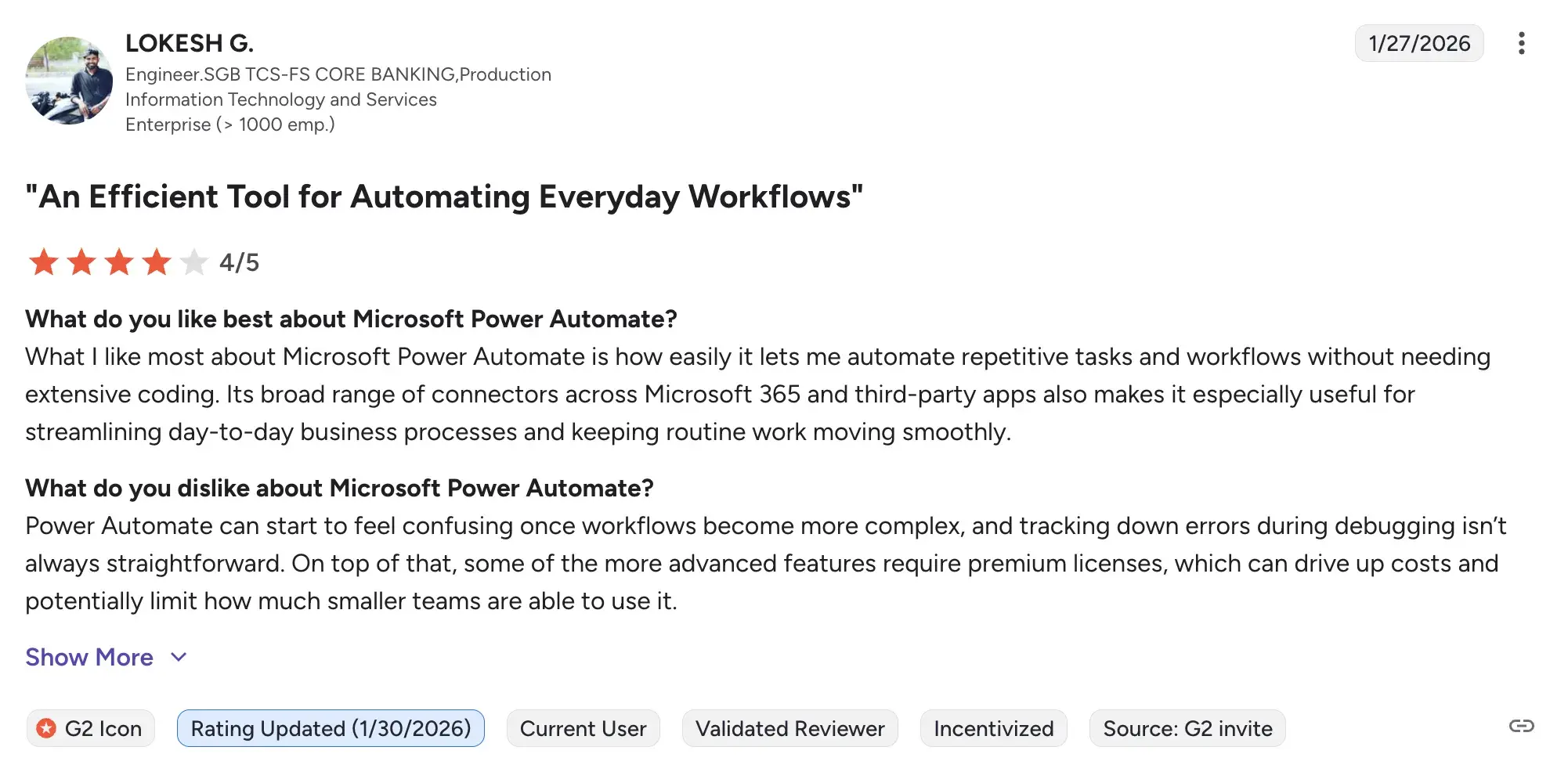
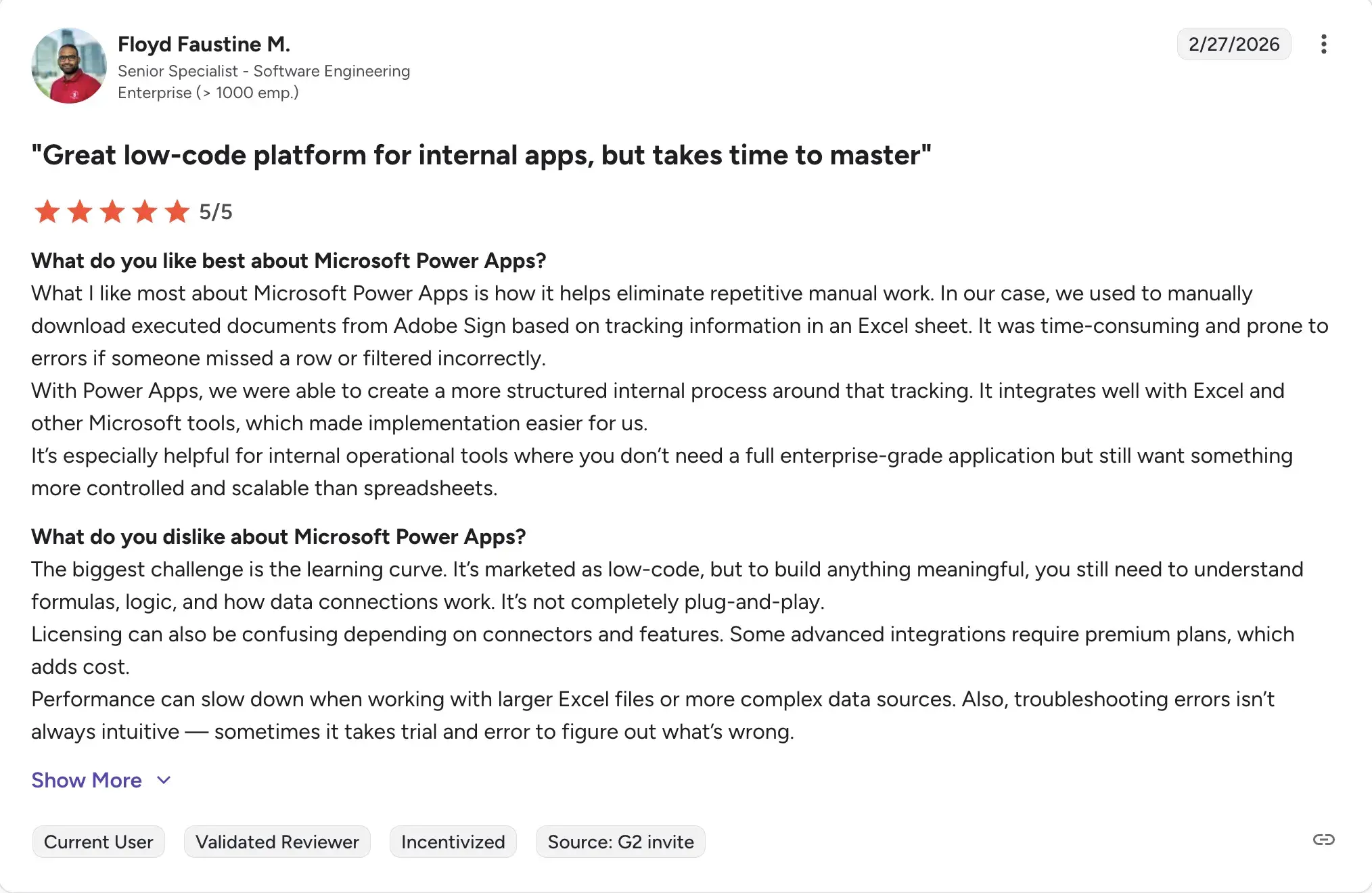
- Deep native integration with Microsoft 365, Dynamics 365, and Azure suits organizations already in that ecosystem.
- High flexibility allows insurers to build workflows tailored to processes that off-the-shelf tools don't accommodate.
Source
- Over 400 connectors enable broad integration with carriers, CRMs, and legacy systems.
Source
Cons of Power Apps + Automate
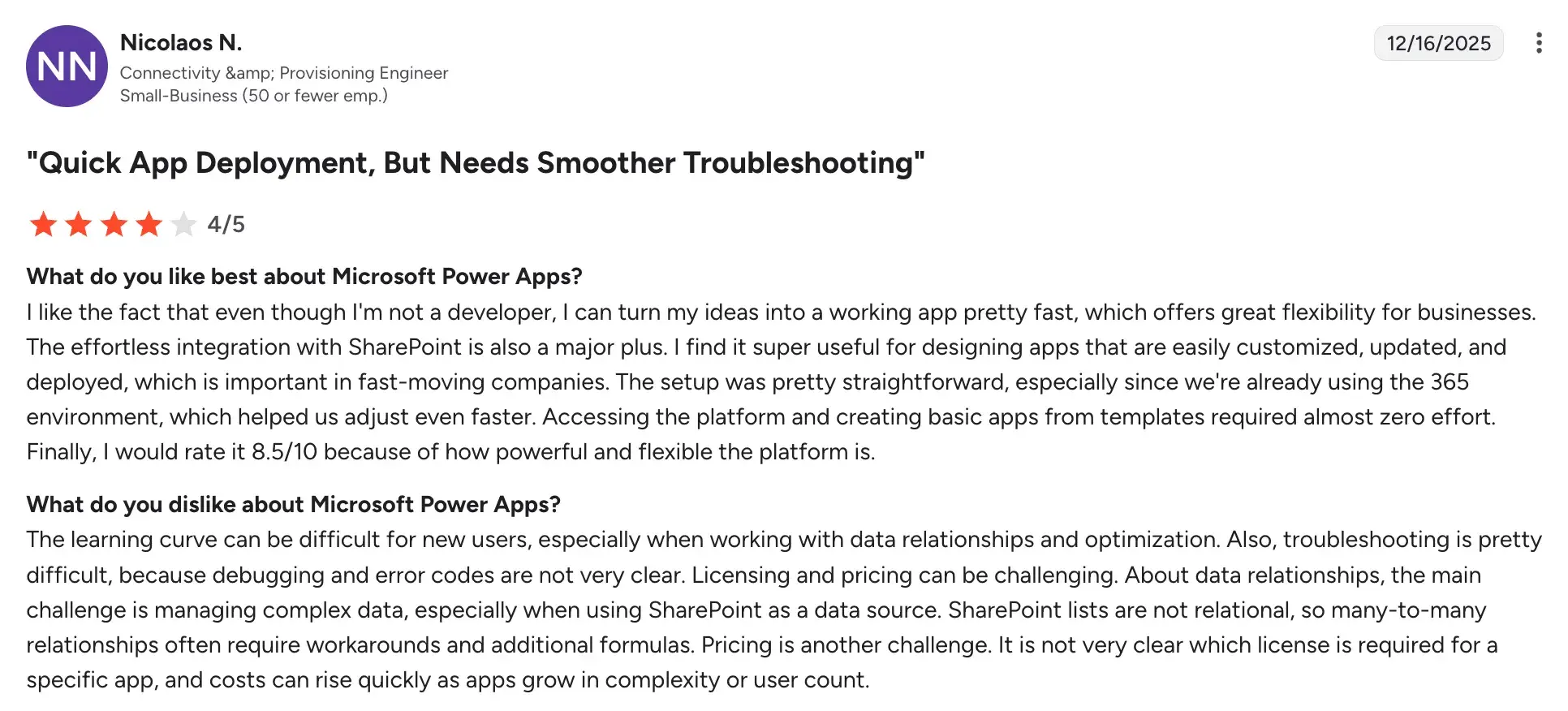
- Achieving insurance-specific depth requires significantly more build effort than dedicated platforms.
- Advanced use cases often require developer support and careful licensing planning
Source
- Citizen-developer-built applications can become difficult to maintain or debug over time.
7. Origami Risk
Origami Risk’s homepage
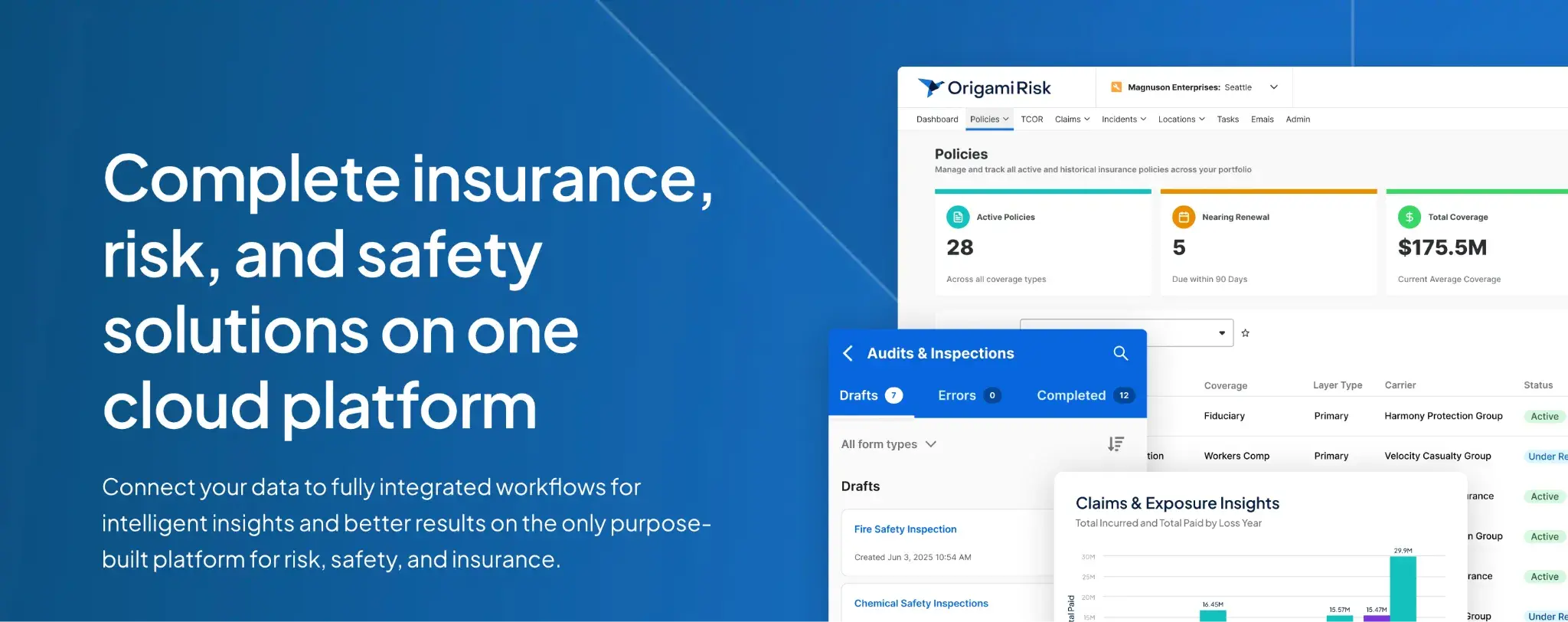
Origami Risk is a cloud-native, highly configurable SaaS platform that spans risk management, governance, compliance, safety, and P&C insurance administration. For insurance teams, it serves as a unified system for managing the entire policy lifecycle, including claims administration, loss control, and analytics, all within a single, connected platform.
Key features of Origami Risk
End-to-end policy administration
Insurers, MGAs, program administrators, and TPAs can configure the platform to align with their specific policy management workflows and deliver a modern buying experience for agents and policyholders.
Integrated risk and compliance management
The platform connects insurable and non-insurable risk data in one place, linking policies to risk registers, compliance controls, and audit workflows.
Claims administration
Role-based dashboards and real-time alerts keep claims teams and stakeholders informed at each stage, reducing delays and improving the accuracy of claims data.
Configurable analytics and reporting
The platform includes customizable dashboards and pre-built reports that give risk managers and insurers visibility into policy performance, loss trends, and compliance status. Reports can be tailored for different audiences, and data can be imported from external sources to enrich your analysis.
Pros of Origami Risk
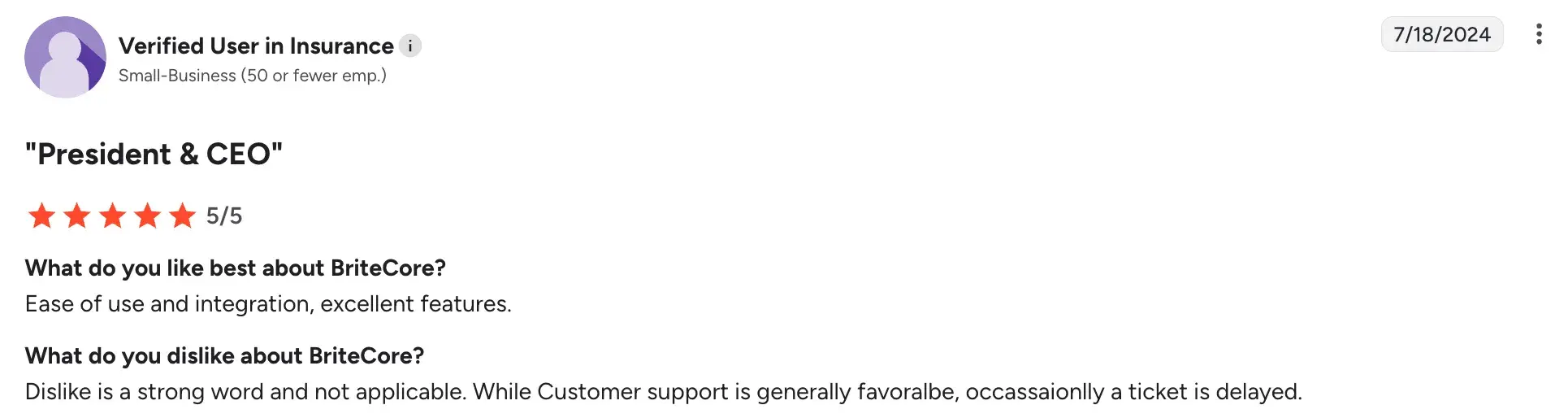
- High configurability lets teams tailor workflows and reporting without custom development.
Source
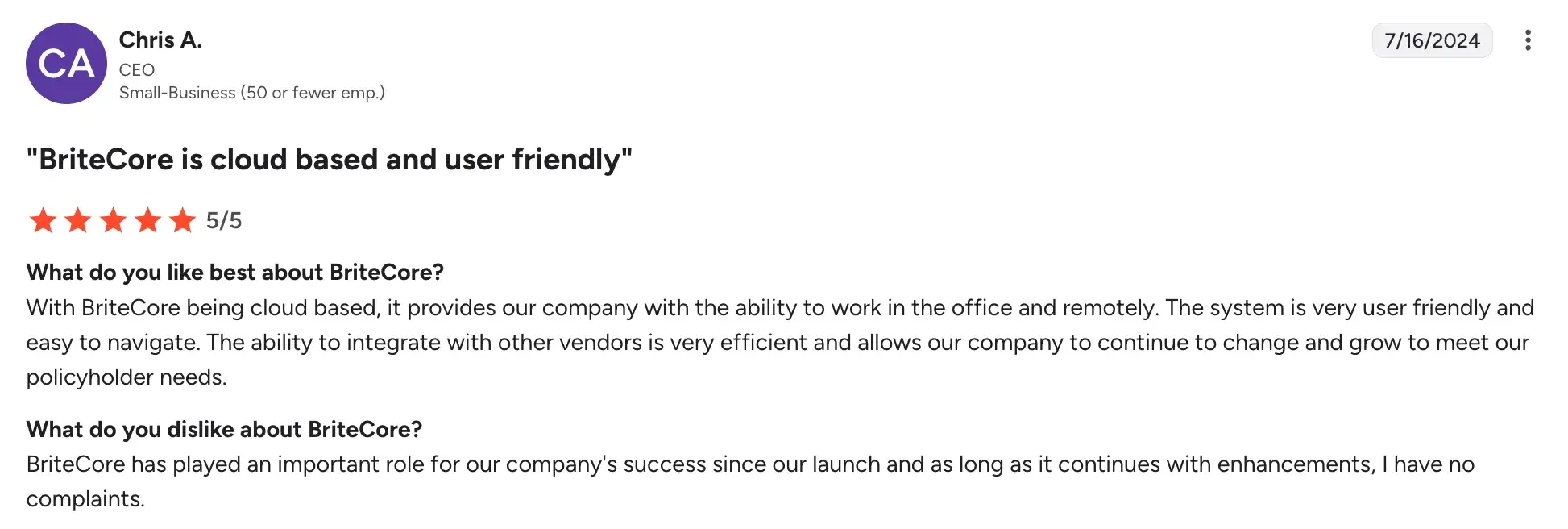
- A unified platform reduces the need for separate risk management and insurance administration tools.
Source
- Customer service and implementation support are consistently rated highly by users.
Cons of Origami Risk
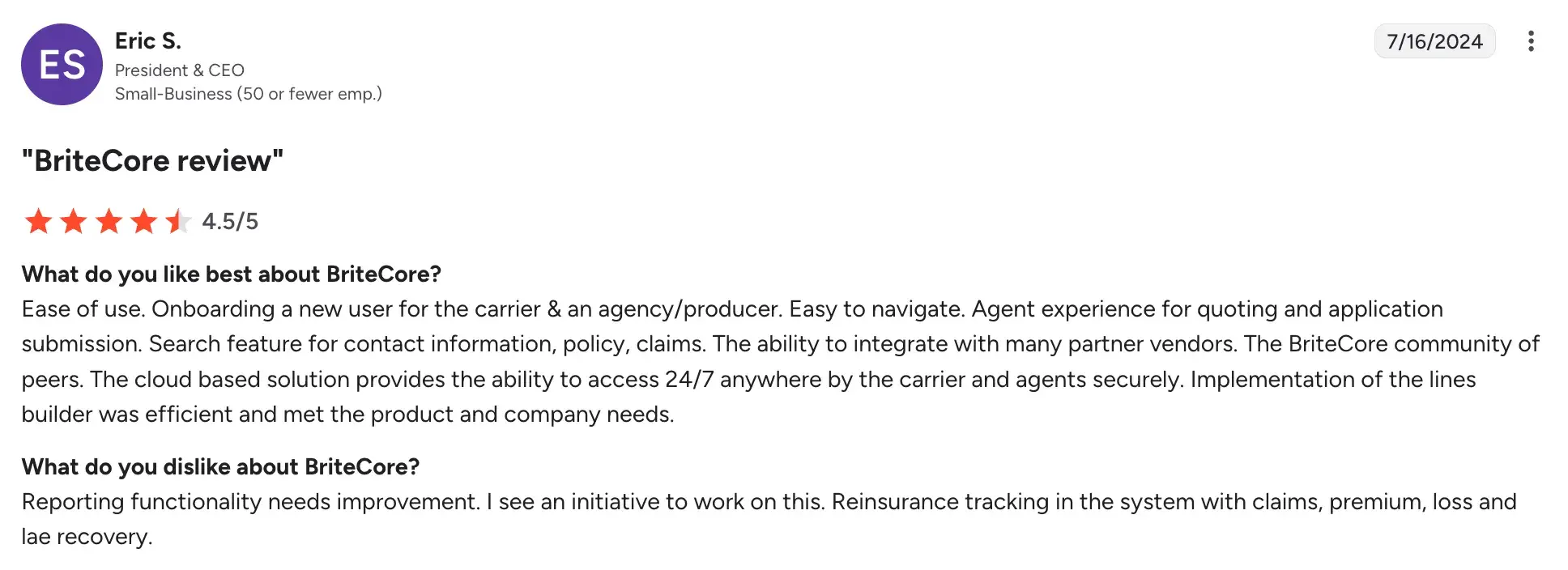
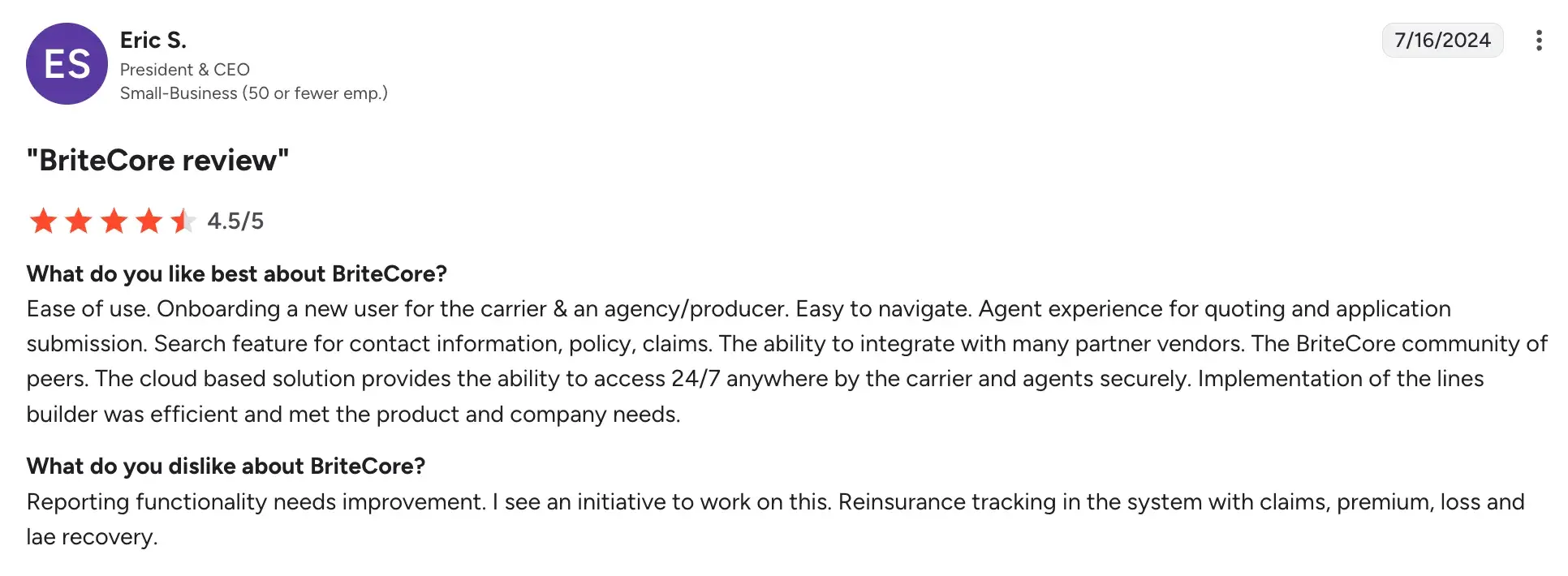
- Needs improvement in reporting functionalities
Source
- Implementation timelines can be lengthy for carriers migrating from legacy systems
- Smaller ecosystem compared to larger enterprise platforms
Source
8. Insly
Insly’s homepage
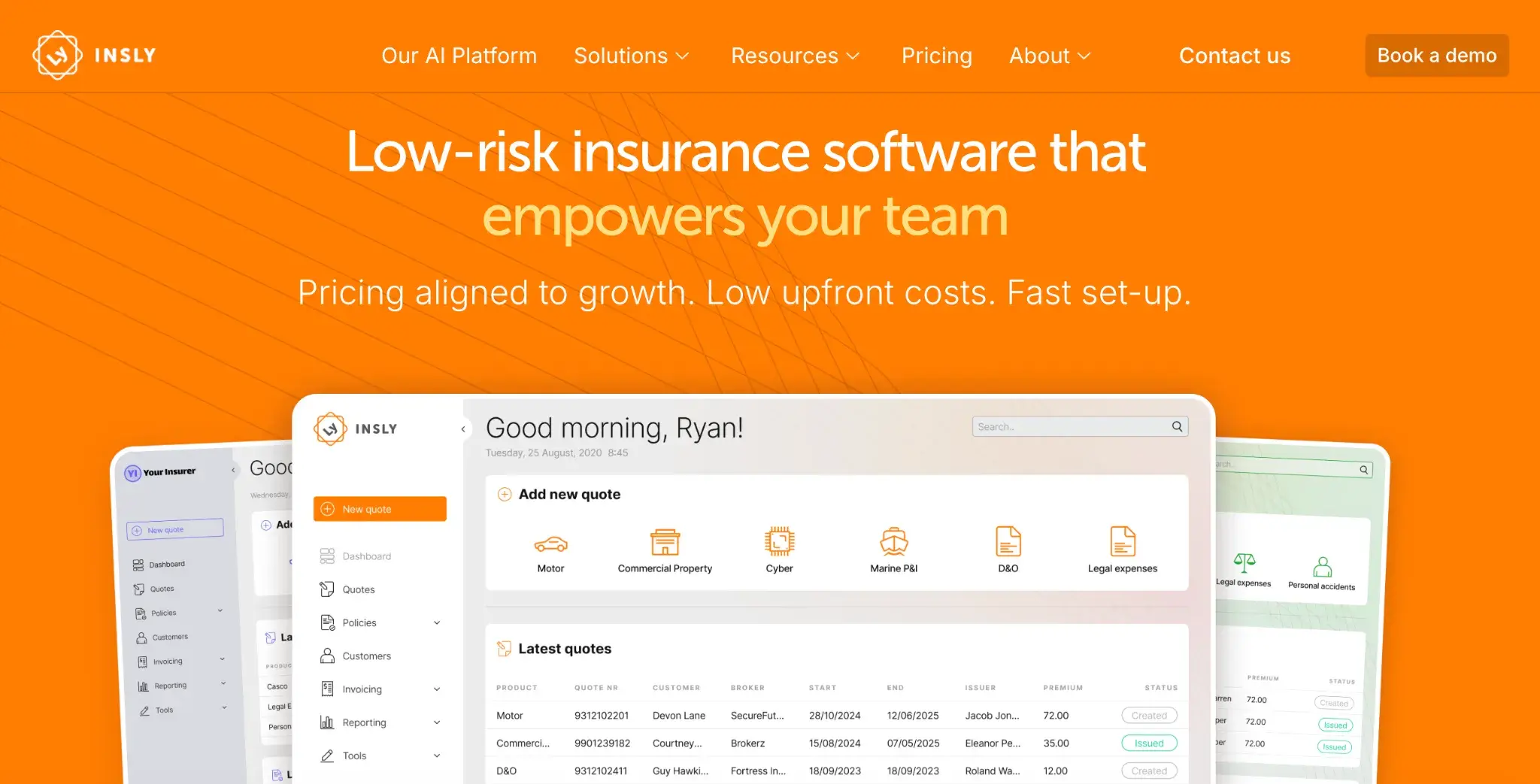
Insly is a cloud-based, no-code insurance management platform built specifically for brokers, MGAs, and smaller carriers. It covers the full insurance workflow, from quoting and policy issuance to billing, accounting, claims, and renewals, making it a practical, all-in-one solution for teams looking to digitize their operations without a lengthy implementation process.
Key features of Insly
No-code product configuration
You can build and launch new insurance products using forms, workflows, and document template editors directly within the platform, significantly reducing your time to market.
Automated quoting and renewals
The platform generates real-time insurance quotes via direct XML connections to carrier systems, and its automated renewal engine can handle routine renewals end-to-end.
Policy administration and accounting
Insly manages the full policy lifecycle, including mid-term adjustments, cancellations, and reinstatements, as well as premium accounting, bordereaux reporting, and payment mapping.
API-first architecture and multi-channel distribution
Insly exposes its functionality through open APIs, allowing you to connect it with your existing CRM, accounting software, or custom portals. It also supports broker channel distribution out of the box, so carriers can reach agent networks without building separate distribution infrastructure.
P.S. Insly boasts a 4.5 rating with just one review.
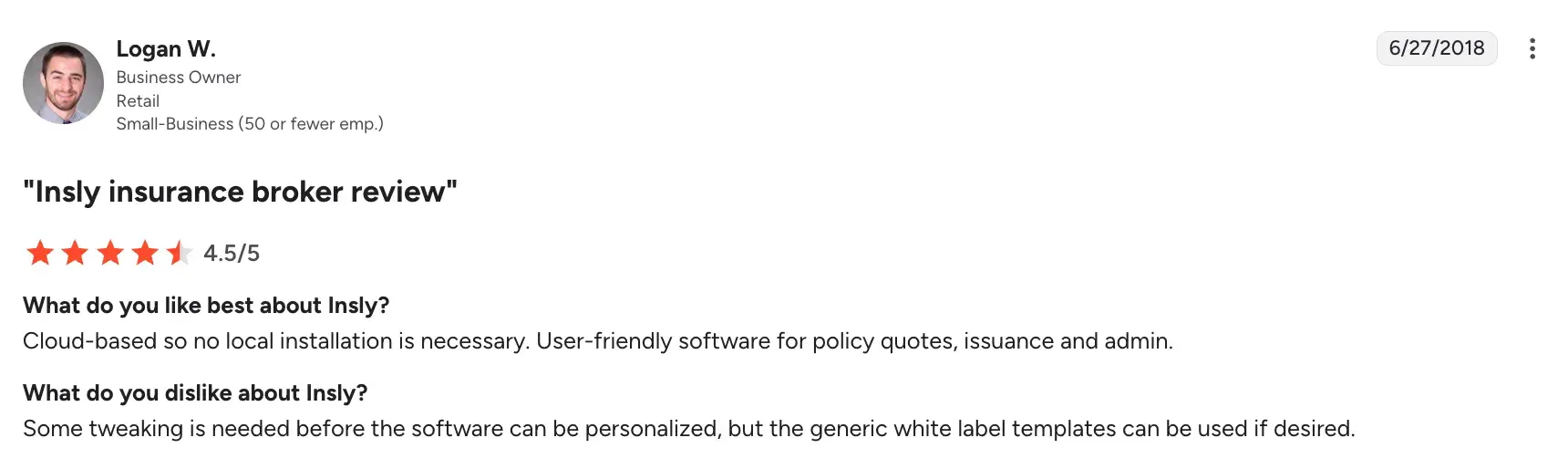
Based on this review and our evaluation criteria, we’ve collated the following pros and cons:
Pros of Insly
- Purpose-built for brokers and MGAs, covering key workflows without significant customization.
- Cloud-based deployment means your team can get up and running quickly from any device.
- Competitive pricing makes it accessible for smaller teams and growing agencies.
Cons of Insly
- Complex or niche product configurations may still require support from Insly's team rather than being fully self-service.
- Real-time quote retrieval can introduce minor delays when aggregating prices from multiple carriers.
- Customer support response times can be inconsistent for issues requiring escalation.
9. NowCerts
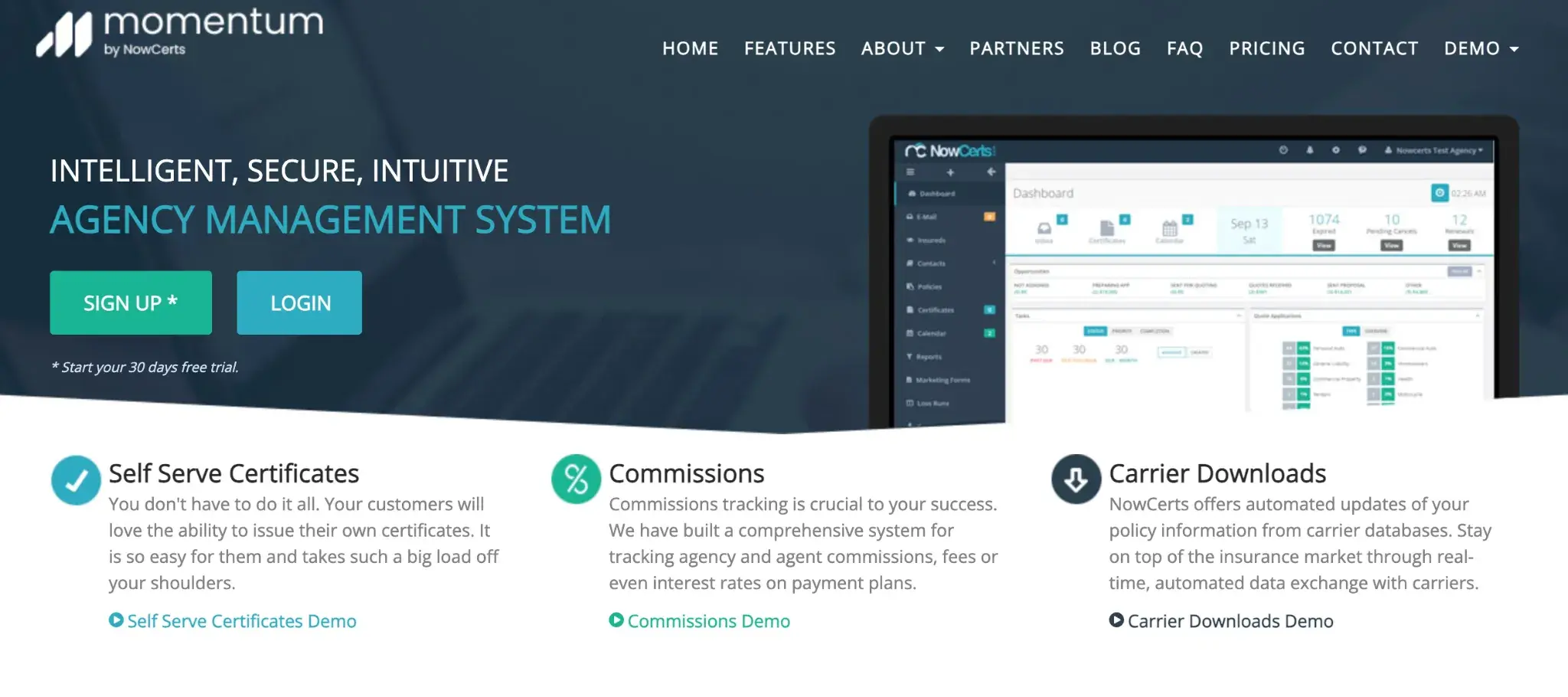
NowCerts’s homepage
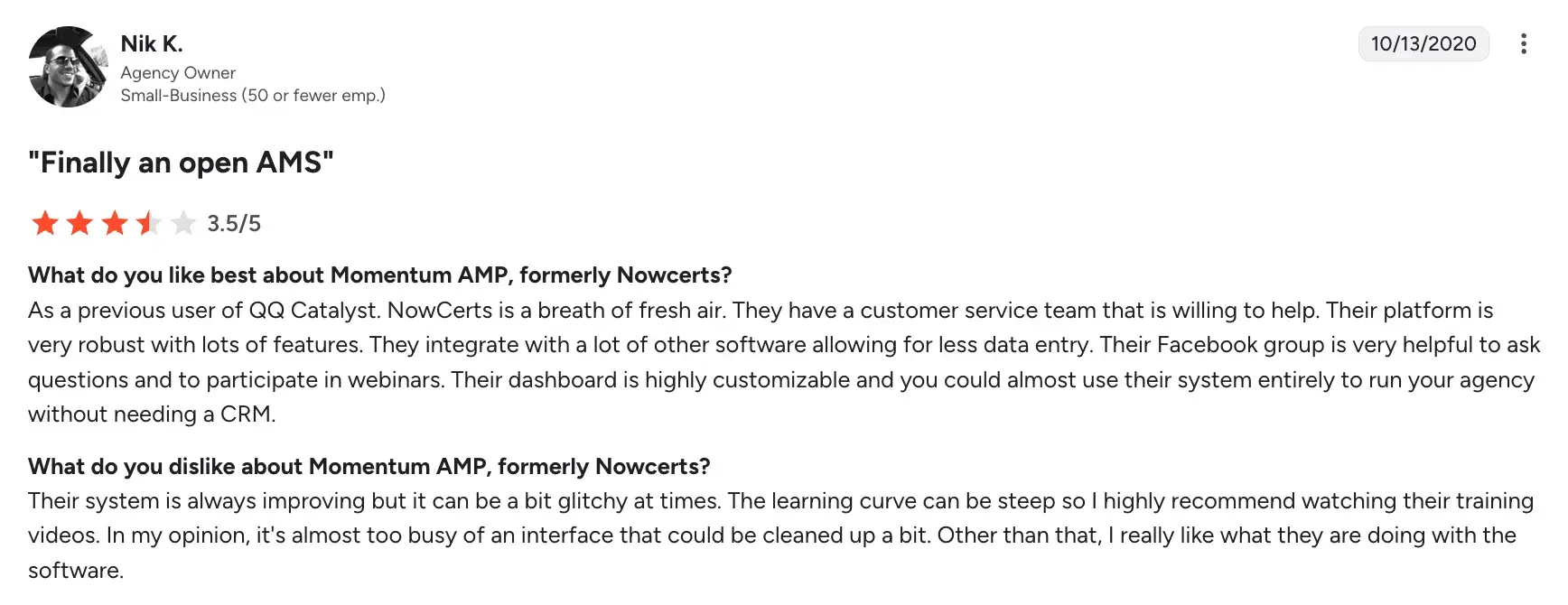
NowCerts, now operating as Momentum AMS, is a cloud-based agency management system built by and for insurance professionals. It's designed to help independent agents and brokers manage policies, clients, commissions, and compliance tasks in one centralized platform, with a pricing model that works well for agencies of all sizes.
Key features of NowCerts
Policy and client management
NowCerts centralizes your policy data, client records, ACORD forms, and communications in a single system. Agents can track active policies, manage endorsements, monitor renewal dates, and receive automated reminders before cancellations or lapses occur, helping you retain clients and reduce administrative errors.
Certificate of insurance processing
One of NowCerts' standout capabilities is its self-service certificate-of-insurance workflow. Policyholders can request and download their own certificates directly from a client portal, without your team needing to manually generate and send each one.
Commission tracking and invoicing
The platform automates the calculation and tracking of agent and agency commissions, carrier fees, and payment plans. It also handles invoicing, receipts, and billing reconciliation, giving your accounting team a clear view of financials without relying on separate spreadsheets or tools.
Carrier downloads and integrations
NowCerts offers policy downloads from over 300 carriers, keeping your client data current without manual entry.
Pros of NowCerts
- Built around agency workflows, requiring less configuration to get up and running.
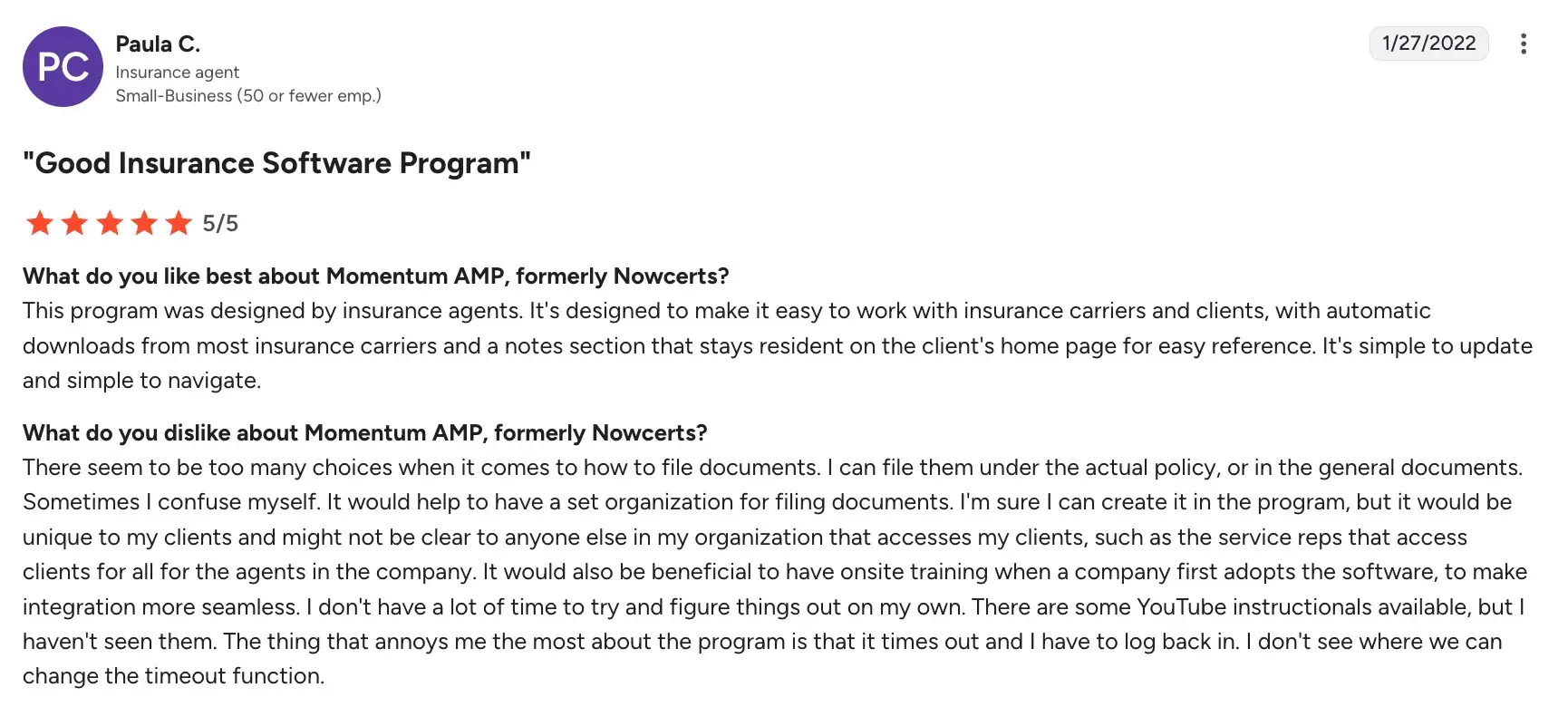
Source
- Self-service certificate issuance saves significant time for commercial lines teams.
- Affordable pricing and responsive support make it well-suited for smaller agencies.
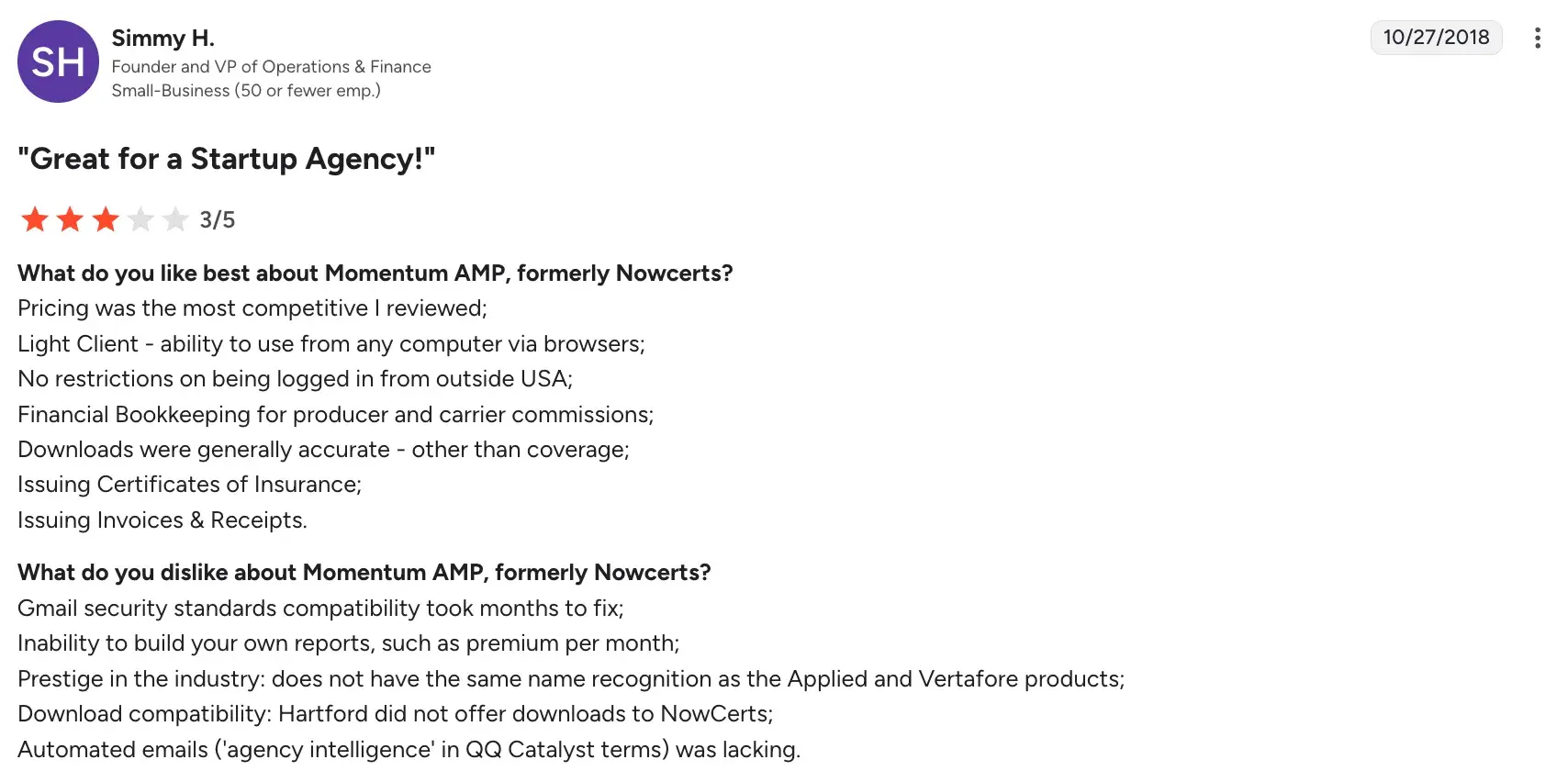
Source
Cons of NowCerts
- The initial setup and data migration process requires dedicated time and planning.
- API and Zapier integrations are limited in the depth of data they can expose.
- Steep platform learning curve
Source
10. BriteCore
BriteCore homepage
BriteCore is a cloud-native policy administration platform built for P&C carriers, mid-size insurers, and growing MGAs. It handles the core functions of policy management, billing, and claims in a single, API-connected system, giving carriers the tools to manage their operations efficiently and launch new products to market faster.
Key features of BriteCore
Full policy lifecycle management
Automated verifications and configurable workflows reduce manual processing, while version-controlled product templates make it easier to maintain consistency across your book of business.
Billing and accounting automation
Carriers can reconcile financial records, track payments, and manage installment plans within the same platform that handles policy administration.
Agent and policyholder portals
BriteCore provides ready-to-use agent and policyholder self-service portals, as well as a mobile app, so your distribution channels and customers can access policy information, submit requests, and make payments without contacting your team directly.
API-first integration and data architecture
Built on an API-first architecture, BriteCore connects easily with third-party tools, including CRMs, payment gateways, rating services, and data providers.
Pros of BriteCore
- Designed specifically for P&C carriers with quick deployment
Source
- Cloud-native with modern architecture that reduces maintenance overhead
- Covers policy, claims, and billing in one integrated system
Source
Cons of BriteCore
- Needs improvement in reporting functionalities
Source
- Implementation timelines can be lengthy for carriers migrating from legacy systems
- Smaller ecosystem compared to larger enterprise platforms
Source
Which Insurance Policy Management Software Is Right For You?
Every platform on this list solves a different policy management challenge. Here's a quick guide to help you find the right fit.
- FlowForma: Works great if you're on Microsoft 365 and want to automate policy workflows end to end without writing any code.
- Sapiens: Best suited for insurers running specialised lines like life, workers' compensation, or reinsurance that generalist platforms don't serve well.
- Guidewire: The natural choice for mid-to-large P&C carriers that need enterprise-scale policy, billing, and claims operations on one platform.
- Applied Epic: A strong fit for independent agencies managing both P&C and Benefits who need a single system for their entire book of business.
- Nintex: A solid pick if you want to automate specific policy workflows, approvals, and document generation without committing to a full insurance platform.
- Power Apps + Automate: The right choice if you're already deep in the Microsoft ecosystem and need flexible, custom-built policy applications and workflows.
- Origami Risk: Ideal if you need to manage insurance administration and enterprise risk management together, without running two separate systems.
- Insly: Built for brokers and MGAs who need insurance-specific operations like policy admin, bordereaux reporting, and automated renewals ready to go from day one.
- NowCerts: A good option for independent agencies that want an affordable, straightforward system with strong carrier connectivity and self-service certificate issuance.
- BriteCore: The right fit if you're a P&C carrier or MGA looking to replace a legacy core system with modern, cloud-native policy administration infrastructure.
Less Manual Work, Faster Decisions, And Happier Teams—All With FlowForma
Of all the tools on this list, FlowForma is the fastest way for insurance operations teams to move from manual processes to running automation. Describe your policy issuance or renewal workflow to Copilot, and it builds the steps, logic, and routing rules for you.
Your team deploys it inside Microsoft 365, where they already work, and every action is logged and auditable from day one.
If you're ready to spend less time on admin and more time on work that actually moves the needle, book a demo or start a 7-day free trial today.
.png?width=175&height=42&name=logo_20(1).png "FlowForma Process Automation")




.png)